
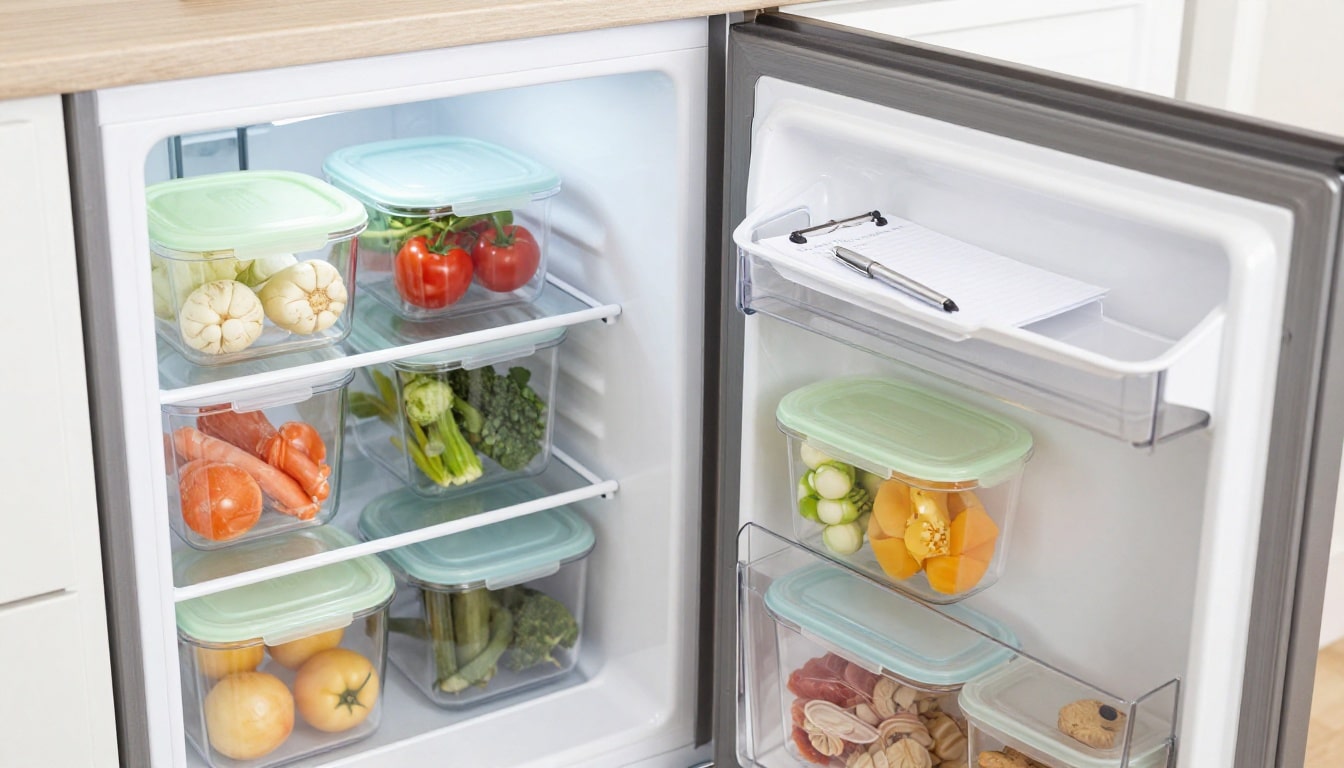
If your freezer has ever produced an unmarked, frost-covered “thing” that could be chili, bolognese, or the start of a science project, you’re not alone. Freezers are great at preserving food, and even better at hiding it.
The fix isn’t a complicated app or a weekend project. A simple freezer inventory can work if it’s fast, visible, and forgiving when life gets busy. The trick is one list plus two physical zones, so your brain doesn’t have to remember what your freezer already knows.
The one-list, two-zone method (why it works when you’re tired)

Most freezer systems fail for the same reason diets fail: they assume you’ll behave like a calm robot at 6 pm. In real life, you’re hungry, someone’s asking questions, and the freezer door is fogging up. You need a system that works even when you’re rushed.
The two-zone setup gives you a default path for food. Think of it like a small library. New books go on the shelf, and the ones you plan to read soon go on the nightstand. Your freezer works the same way:
- Front / Quick-Grab Zone: foods you want to use next, plus “weeknight helpers” like frozen veg, broth cubes, dumplings, or bread.
- Back / Deep Storage Zone: backups, bulk buys, long-haul items, and anything you won’t touch this week.
One list ties it together. Not two lists, not a note in your phone plus a whiteboard plus good intentions. A single master list removes the guesswork and lowers the friction, which is the real enemy here.
Here’s the simple logic behind it:
| Part of the system | What it prevents | Why it’s easy to keep up |
|---|---|---|
| Two zones in the freezer | Items getting buried and forgotten | You always know where “use soon” lives |
| One master inventory list | Buying duplicates and losing track | One place to update, no hunting |
| Front-first rule | Freezer burn and “mystery ice bricks” | No decisions at dinner time |
The takeaway is almost boring, which is a compliment. When the system feels obvious, you’ll actually use it.
If you only remember one rule, make it this: new items go to the back, dinner comes from the front.
The 10-minute setup that makes freezer inventory feel effortless

You don’t need to empty the whole freezer or alphabetize your peas. You just need enough order that future-you can succeed on a random Tuesday.
Pick your “front.” In an upright freezer, it’s eye-level and the door bins. In a drawer freezer, it’s the top layer. In a chest freezer, it’s the basket and the top six inches. That’s your Quick-Grab Zone.
Then set a timer. The goal is movement and labeling, not perfection.
- Make space for the Quick-Grab Zone (2 minutes): Slide aside whatever’s on top or in front. Put it on the counter for a moment. Cold food can sit out briefly while you work.
- Decide what belongs in front (3 minutes): Pull out anything already open, any partial bags, and anything you want to cook within 7 to 14 days. Also grab “glue foods” (items that make meals easier), like cooked rice, chopped onions, or portioned chicken.
- Push the rest into Deep Storage (3 minutes): Group similar items loosely, meat with meat, veg with veg, breakfasts together. You’re creating lanes, not a museum exhibit.
- Start the one list (2 minutes): Tape a paper to the freezer door, or use a small magnetic notepad. Write two headers: Front and Back. Add only what you can see quickly.
A practical format keeps the list useful. Write item, quantity, and a date. The date can be the month you froze it (like 2026-02). That’s enough to stop time from becoming a blur.
If you’re thinking, “What about everything already in there?” start with a partial list. The system still works because it’s directional. As you cook and restock, the list becomes complete without a big cleanout day.
Keeping your freezer inventory alive with tiny habits (not a major rewrite)
A freezer inventory succeeds or fails in the follow-through. The good news is the follow-through can be small. The goal is to update the list at the same moments you already touch the freezer.
First, make “add” stupidly easy. Keep a pen attached to the list, or store one in a nearby drawer. When you put new food away, write one line before you close the door. Not later. Later is where good intentions go to nap.
Second, make “use” satisfying. Crossing things off is the reward. If you prefer neatness, use tally marks instead of erasing. Either way, you want a quick signal that dinner actually reduced the pile.
Third, rotate with a light touch. Once a week, take 5 to 10 minutes to pull two or three older items from the back and move them to the front. You’re not reorganizing the freezer, you’re feeding the front zone so it stays interesting.
This is where the system quietly saves money. Frozen food doesn’t “go bad” on a strict schedule, but quality drops over time. The rotation keeps textures better, reduces freezer burn, and stops you from buying replacements for food you already own.
A few real-life rules help in shared homes and small kitchens:
- One person owns the list, everyone follows the zones: updates stay consistent, while the system still helps the whole household.
- Odd shapes get a container: toss small bags and mystery shapes into one open bin labeled “Front.” The bin is the zone.
- Leftovers need a name on the container: even a two-word label (like “lentil soup”) prevents the ice-brick identity crisis.
Don’t aim for a perfect freezer. Aim for a freezer that answers one question fast: “What can I cook next?”
Conclusion
A freezer shouldn’t feel like an escape room. With one list and two zones, your freezer inventory becomes a simple habit instead of a project. Set it up once, then keep it alive with quick adds, satisfying cross-offs, and a small weekly rotation. Next time you open the door, you’ll see options, not mysteries. What would it feel like to plan dinner using what you already have?


