
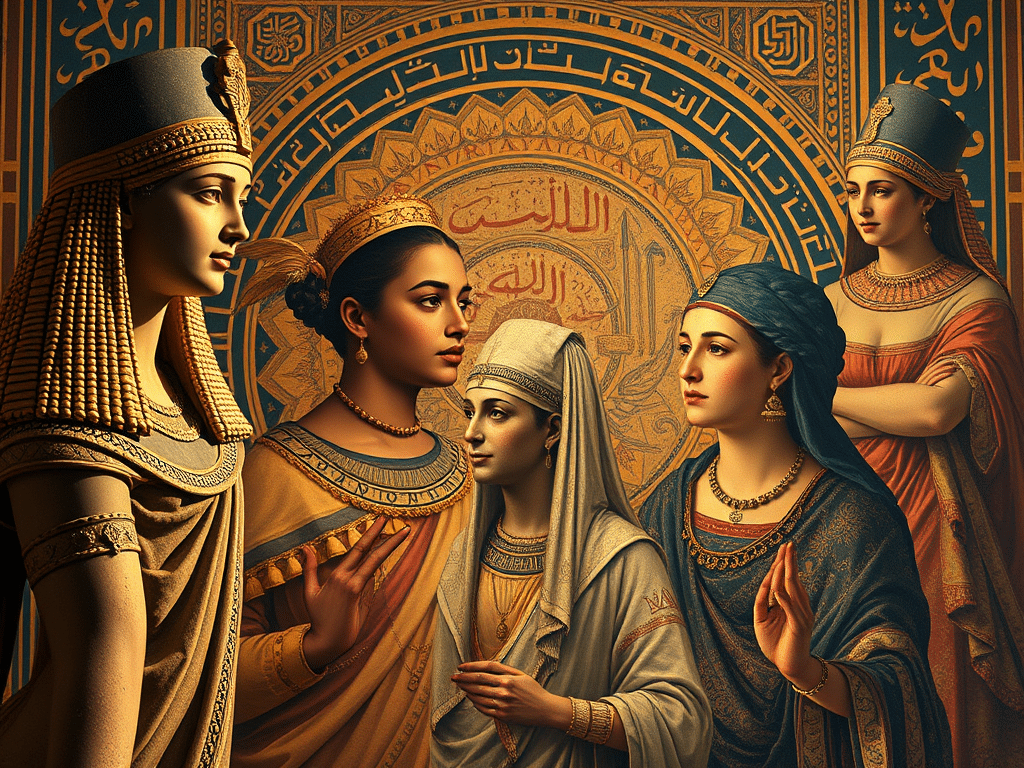
Art has always been a mirror to society, reflecting its values, struggles, and changes. When studying the portrayal of women in Middle Eastern art, you’re not just looking at paint on a canvas or shapes in a sculpture. You’re exploring stories about identity, power, and perception. These portrayals, often shaped by cultural norms and historical contexts, highlight how women’s roles and representation have evolved and been debated across the region. This exploration is essential—it broadens our understanding of how art challenges stereotypes while preserving cultural narratives.
Historical Context of Women in Middle Eastern Art
The portrayal of women in Middle Eastern art is deeply intertwined with historical, cultural, and religious narratives. Examining these depictions gives us insight into the societal constructs of gender and how they have informed artistic expression throughout history.
Ancient Art and Gender Roles

Photo by cottonbro studio
In the ancient Middle East, art served as a visual storytelling medium, reflecting societal values and roles. Women were often depicted through the lens of their duties—domestic, religious, or societal. For example, in Mesopotamian art, goddesses like Ishtar, the deity of love and war, were immortalized in statues and carvings symbolizing fertility and power. These representations highlight a duality: the reverence for feminine creativity and the responsibilities bound to societal expectations.
Egyptian art, another cornerstone of Middle Eastern antiquity, portrayed women alongside men, often in familial or religious contexts. These depictions showed women with detailed ornamentation, emphasizing their roles in lineage and spirituality. Some carvings portrayed queens like Hatshepsut in masculine regalia, underlining their complex identities as both rulers and women.
Artifacts from this period reveal that gender roles were not merely restrictive but celebrated particular aspects of womanhood. These portrayals, however, often perpetuated a hierarchy by keeping women’s identities tied to their societal roles rather than individual autonomy.
Islamic Art and Women’s Representation
The rise of Islamic art brought a distinct transformation in the portrayal of women. Islamic art is renowned for its calligraphy, geometric patterns, and aniconism—the avoidance of depicting sentient beings. But representations of women were not entirely absent. Miniature paintings from the Persian Safavid and Mughal empires, for instance, occasionally featured women within idyllic, romanticized settings—suggesting their roles in stories or poetry.
Religious influence and cultural customs created boundaries shaping these portrayals. Islamic principles emphasize modesty, which influenced artistic practices. For instance, women were often represented through symbols or veiled figures rather than in direct, detailed likeness. Such portrayals balanced artistic expression with the cultural and religious adherence of the time.
Yet, women were not merely passive subjects in art but also patrons. From the Ottoman Empire to Mughal India, aristocratic women funded architectural projects and works of art. Their patronage allowed for subtle forms of self-representation, where their influence transcended the physical depiction of their likeness.
A broader understanding of Islamic art reveals its diversity and complexities in representing women. To explore more on this subject, resources such as “Depiction of Women in Islamic Art” offer deeper insights into this evolution.
These historical perspectives reveal the nuanced portrayal of women in Middle Eastern art, as well as the societal forces that shaped their depiction through different eras.
Modern Perspectives on Women in Art
The portrayal of women in Middle Eastern art has undergone a remarkable transformation in recent years. The evolving role of female artists and the attention brought by exhibitions spotlighting their work have redefined how we perceive women’s identities and contributions within this cultural framework. This section examines the emergence of female artists and the influence of exhibitions that celebrate their voices.
Emergence of Female Artists

Photo by cottonbro studio
Female artists in the Middle East are reshaping narratives that have historically positioned women within restrictive societal roles. These women are not just creating art—they are defiantly revising the dialogue around gender, politics, and expression. Through painting, sculpture, photography, and digital media, their work often addresses themes of identity and resistance.
In today’s art scene, figures like Huda Lutfi and Hayv Kahraman demonstrate the depth of this transformation. For instance, Kahraman’s work frequently explores the tension between cultural narratives and personal experience. Her art questions historical representations and offers a multidimensional view of womanhood—one that shatters stereotypes and embraces complexity.
Such efforts emphasize an important shift: women are no longer merely subjects of artistic representation; they are creators and commentators. Platforms such as the Dubai Collection underline how female Arab artists champion modern interpretations by bringing once-silenced stories to the forefront. These contributions have been pivotal in helping audiences appreciate the nuanced realities behind cultural depictions of women.
Exhibitions and Their Impact
Exhibitions focusing on women’s contributions have brought much-needed visibility to these conversations. An excellent example is the “Women Defining Women in Contemporary Art of the Middle East and Beyond” exhibition, hosted by LACMA. Featuring 75 works by women artists from Islamic societies, the exhibition defies stereotypes by placing individual experiences and perspectives at the center of the narrative.
Similarly, other spaces, like the “Louder Than Hearts” exhibit, emphasize the personal and political stories of women in the region. Whether showcasing Kurdish women fighters through photography or highlighting the everyday resilience of Arab womanhood, these exhibitions disrupt one-sided narratives. You can learn more about these events and their influence at Al Arabiya.
What makes these exhibitions powerful is their ability to challenge societal notions. They invite viewers to confront questions about representation directly: Who defines what it means to be a woman in the Middle East? How can art serve as a tool for understanding and progress?
Through exhibitions like these, audiences around the world witness not just the incredible talent of Middle Eastern women but also their resilience and dynamism. By providing platforms for these voices, the art world builds bridges—fostering understanding and revealing the layered beauty of diverse female experiences.
Themes in the Portrayal of Women
Art does more than just depict; it communicates, questions, and challenges. When it comes to the portrayal of women in Middle Eastern art, themes often oscillate between objectification and empowerment. These depictions are influenced by layered cultural and political narratives that intertwine with history and modern ideologies. Let’s dive into these themes in detail.
Objectification vs. Empowerment

Photo by Ahmed akacha
The line between objectification and empowerment in artistic portrayals of women is often thin. Some works position women as aesthetic objects, reduced to their physicality or roles within confined societal norms. For instance, Orientalist paintings from the 19th and early 20th centuries frequently presented women as exotic and submissive, catering to Western fantasies rather than reflecting their lived realities. These portrayals perpetuated stereotypes and stripped women of agency.
However, contemporary artists are flipping this narrative, using art to comment on societal expectations and celebrate individuality. Take the work of Shirin Neshat, an Iranian visual artist, whose series Women of Allah contrasts images of women with bold Farsi calligraphy. Neshat’s pieces critique traditional roles and use visual contradictions to provoke thought about freedom, faith, and power.
In a similar vein, Hayv Kahraman, an Iraqi artist, examines the weight of migration and identity through women’s bodies in her art. Her works often depict women balancing cultural expectations while reclaiming their narratives. These depictions provide stark contrasts to colonial-era objectification, making them potent symbols of empowerment.
For a broader look at how art challenges stereotypes, you can explore this Artsy article on boundary-pushing artists.
Cultural and Political Narratives
The portrayal of women in Middle Eastern art is tightly woven into its cultural and political backdrops. Art reflects the tensions and transformations of its time, acting as a canvas where societal debates take form. During moments of political upheaval, women often symbolize broader struggles, lending their depictions a powerful resonance.
For instance, during the Arab Spring, murals and posters often featured women as symbols of both resistance and hope. Yet, these depictions varied widely based on local cultural nuances. In Egypt, graffiti artists portrayed women as strong and defiant, shedding traditional passivity to stand as icons of revolution. Such art shifts the narrative from women as passive subjects to active participants in their histories.
At the same time, the influence of governance plays a significant role. In regions like Iran, strict censorship impacts how art portrays women. In response, artists have developed metaphorical languages, using veils, flowers, or even negative space to symbolize women’s identities, desires, and challenges. This creativity under constraint reflects the adaptability and resilience of artists working within restrictive environments.
To understand how political contexts shape artistic expression in the region, see this informative piece on art and sociopolitical narratives in the Middle East.
With such cultural and political undercurrents, it becomes clear that the portrayal of women in art is more than a visual statement. It’s an ongoing dialogue shaped by context, power, and transformation. Each brushstroke or photographic angle carries a message, questioning norms and offering alternate views of womanhood intricately tied to identity and history.
Case Studies of Notable Artworks
The portrayal of women in Middle Eastern art is as varied as it is profound. By examining specific artists and their works, we can uncover unique perspectives and cultural messages that have shaped the artistic narrative in the region. This section provides insight into the incredible depth and diversity of this topic.
Analysis of Key Artists
The work of contemporary female artists in the Middle East provides a lens through which we can understand the evolving role of women in art. These creators don’t just depict—they challenge, critique, and redefine.
Take, for example, the Iraqi artist Hayv Kahraman. Her paintings, often featuring ghostly female figures with elongated limbs, explore the intersection of gender, culture, and migration. Her series “Reconstructions” profoundly examines the fractured yet resilient identities of women, reflecting on her own experiences as an immigrant. Through muted palettes and layered symbolism, Kahraman confronts patriarchal structures, making her work as much about resistance as it is about survival.
In parallel, Mona Hatoum, a Palestinian-born artist, engages in a different form of storytelling. Her installations and sculptures often highlight themes of displacement and identity. For instance, her piece Measures of Distance combines intimate letters from her mother with fragmented visuals, creating a poignant dialogue about separation and connection. This work not only speaks to the personal but also to the universal struggles faced by women within patriarchal and exilic spaces.

Photo by Tima Miroshnichenko
Similarly, Saudi artist Manal AlDowayan’s installations shed light on women’s roles in her homeland. Her renowned series The Saudi Women Drivers chronicles the fight for women’s rights to drive, presenting the issue as both visually striking and politically loaded. With bold imagery and storytelling, AlDowayan highlights the complexities of female empowerment in a society undergoing rapid change.
Additional examples can be explored through the insightful article “10 Trailblazing Female Artists from the Middle East”.
Cultural Significance of Specific Pieces
Understanding the portrayal of women in Middle Eastern art requires looking deeper at the cultural narratives woven into specific works. Every brushstroke, shadow, and texture carries a story steeped in tradition, struggle, and identity.
One such example is the work of Shirin Neshat, particularly her Women of Allah series. Through bold calligraphy layered on black-and-white photography, Neshat juxtaposes the complex relationship between Islam, femininity, and power. The use of Farsi poetry on the bodies of veiled women reflects both strength and vulnerability, embodying the dualities women navigate within many Middle Eastern societies.
Etel Adnan, a Lebanese artist, and writer, takes a more abstract approach. Her colorful, minimalist landscapes often symbolize the interconnectedness of nature, identity, and feminine energy. Though her works appear simple at first glance, they carry complex undercurrents reflecting on the displacement of women and the broader diasporic experience.
Photographic works by Yemeni artist Boushra Almutawakel strongly challenge traditional norms. Her series Mother, Daughter, Doll critiques stereotypes about hijabi women by playing with the presentation of veiled versus unveiled subjects. This powerful commentary questions societal judgments while celebrating the diversity within Middle Eastern women’s experiences.
Through these diverse studies, it becomes evident that Middle Eastern art not only reflects cultural values but also challenges them. Pieces like these provide a rare glimpse into the layered identities of women in this region. For an exploration of this interplay, refer to “The Women of the Arab Art World”, which delves into the significance of their contributions.
Each artwork and artist highlighted in this section demonstrates the multidimensional roles of women, showing their capacity as both muses and creators in the cultural tapestry of the Middle East.
Conclusion: The Transformative Power of Studying Portrayals of Women in Middle Eastern Art
Understanding the portrayal of women in Middle Eastern art is not just about exploring a creative discipline—it’s a gateway to comprehending the complexities of culture, history, and identity in this richly diverse region. These works of art encapsulate the interplay between tradition and modernity, addressing issues ranging from gender roles to political upheaval. They reflect a visual dialogue that evolves alongside societal perspectives, offering a lens into the subtleties of representation and its broader implications.
This art is layered and multifaceted, much like the societies it emerges from. It challenges simple interpretations, urging us to look beyond the surface. Artists depict not only the struggles and triumphs of women but also the wider cultural narratives that have shaped their lives. Whether through ancient artifacts, Islamic art, or bold contemporary pieces, each work is a thread in the intricate tapestry of Middle Eastern history.
The study of these portrayals sheds light on the roles women have played—not just as subjects but as creators actively shaping the artistic conversation. Their representation marks a shift from objectification in traditional art to empowerment and self-expression in modern contexts. Exhibitions like Women Defining Women in Contemporary Art of the Middle East and Beyond at LACMA and articles on women’s voices in the arts showcase the evolving importance of this dialogue.
As more critical attention is placed on the role women play in the Middle Eastern art scene, a more comprehensive and accurate picture of their experiences is being drawn. Works by artists such as Huda Lutfi, Shirin Neshat, and Hayv Kahraman challenge stereotypes while illuminating diverse perspectives. These voices demonstrate art’s power as a medium for change and introspection.
Choosing to study these portrayals allows for a deeper understanding of how art acts as a bridge between past and present. The visuals carry messages embedded with resistance, renewal, and resilience, resonating worldwide. For further exploration, you can refer to articles like “Women and Art: Creating Spaces for Identity and Freedom” and “The Women of the Middle Eastern Art Scene”, which offer a window into these artistic movements.
By engaging in this study, one doesn’t just learn about women’s portrayals in art but gains a more nuanced appreciation of their integral role in shaping society’s narrative—a narrative that continues to evolve, inspire, and challenge preconceived notions.


