
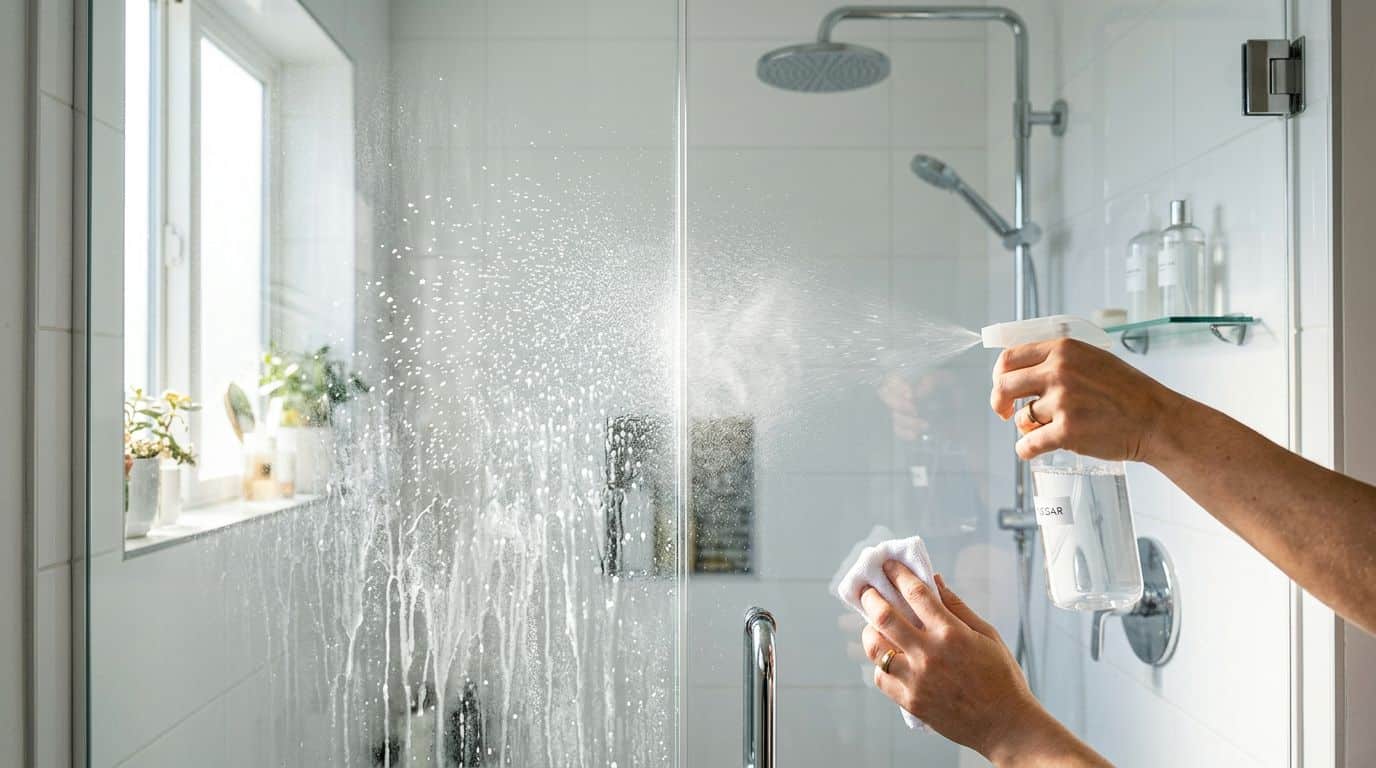
Hard water stains have a special talent for making a clean bathroom look unfinished. One day your shower glass is clear, the next it’s cloudy, spotted, and a little embarrassing when guests visit.
The good news is you can remove hard water stains fast with simple supplies. The trick is to use the right chemistry (acid dissolves minerals), then finish with the right habit (dry glass doesn’t spot).
Start with the fastest fix: warm vinegar on dry glass
Hard water stains aren’t dirt, they’re minerals. When water evaporates, it leaves calcium and magnesium behind, like a chalky film. Because of that, soaps and “extra scrubbing” often waste your time. You need something that dissolves minerals, and white vinegar is the classic for a reason.
Before you begin, set yourself up for speed. Turn on the bathroom fan, open a window if you can, and start with dry glass. Vinegar clings better to dry buildup, so it works faster. If the door is wet, wipe it down once with a towel first.

Use this quick routine to remove hard water stains from shower glass fast, without scratching:
- Spray and stick: Mix equal parts white vinegar and warm water in a spray bottle, then spray generously. Aim for a visible, even coat. If it runs off too quickly, spray again.
- Wait, don’t wrestle: Let it sit 5 to 10 minutes. While it sits, the vinegar is doing the work you’d otherwise try to do with your elbow.
- Wipe with something soft: Use a microfiber cloth, non-scratch sponge, or soft scrub pad. Wipe in steady passes, then rinse well.
- Dry like you mean it: Finish by drying the glass with a towel or squeegee. Air-drying invites a new round of spots.
If you want a second opinion from a lab-tested cleaning source, see these pro tips for removing hard water stains. Their guidance matches what matters most here: dissolve, wipe, rinse, dry.
If you remember only one thing, remember this: minerals dissolve with the right liquid, but they “come back to life” when you let water dry on glass.
When vinegar isn’t enough: add dish soap, then use gentle pressure
Sometimes you’re not dealing with “hard water stains” alone. You’re dealing with hard water stains plus soap scum, body oils, and shampoo residue. That combo can feel like a stubborn, greasy haze that laughs at plain vinegar.
In that case, dish soap helps because it breaks up oils so the vinegar can reach the minerals. Many people like a simple dish soap and vinegar mix for shower glass because it tackles both problems in one pass. Southern Living also points out that glass haze is often a mix of deposits, not a single issue, which is why a one-note cleaner can disappoint. Their walkthrough is helpful if you want extra context on what you’re seeing on the door: how to remove hard water stains from glass.
Here’s the fast way to level up your results without turning this into a weekend project:
- Make a thicker spray: Warm a cup of vinegar (not boiling), then add a small squirt of dish soap. Swirl gently. Spray it onto dry glass, especially the worst areas.
- Hold it in place: For heavy buildup, press a vinegar-soaked paper towel or cloth onto the stains for 10 minutes. This keeps the cleaner from sliding off too soon.
- Use “polite” abrasion: If a few spots still cling, use a non-scratch sponge. Keep the pressure light and the surface wet. Avoid steel wool or harsh scouring pads, since scratches make future staining worse.
- Rinse longer than you think: Soap residue can cause new haze. Rinse until the glass feels squeaky clean, then dry.

Photo by Gustavo Fring
A few caution notes save headaches later. Don’t use vinegar on natural stone (like marble or travertine) near the shower, since acid can etch it. If your shower has stone trim, protect it with painter’s tape, or switch to a stone-safe cleaner. Also, if you’re renting, skip anything aggressive that could scratch glass or damage metal finishes.
For more natural-method detail and good reminders about surface safety, this step-by-step guide is a solid reference: remove hard water stains naturally.
Keep shower glass clear with a 60-second after-shower routine
The real secret to keeping shower glass clear is boring, which is why it works. If you stop minerals from drying on the glass, you don’t have to keep fighting them later. Think of it like brushing teeth, small effort, big payoff.
Start with one habit: squeegee the glass after each shower. It takes about 30 seconds once it’s routine. Follow with a quick towel wipe along the bottom edge, since that’s where water likes to camp out and leave a crusty line.
To make prevention easier, it helps to match the habit to your schedule. Here’s a simple way to think about it:
| Routine | Time | What it prevents | Best for |
|---|---|---|---|
| Squeegee after every shower | 30 to 60 seconds | Fresh spots, drip lines | Busy households |
| Quick towel dry on edges | 20 seconds | Bottom-track buildup | Sliding doors |
| Weekly vinegar mist and wipe | 5 minutes | Early haze, light scum | Anyone with hard water |
| Monthly deep clean (soap + vinegar) | 15 to 25 minutes | Heavy film and dullness | Glass that clouds fast |
The takeaway is simple: the daily squeegee keeps you from needing the monthly workout.
If stains reappear quickly no matter what you do, your water may be very hard. Long term, a whole-home softener can reduce mineral deposits across bathrooms and appliances. This explainer on what hard water does to glass and fixtures gives helpful context: hard water stains on glass shower doors.
Prevention isn’t about perfection. It’s about making “clear glass” the default again.
Conclusion
To remove hard water stains fast, dissolve minerals first (vinegar), then tackle oils (dish soap), and finish by drying the glass. After that, a quick squeegee habit keeps the problem from restarting. Your shower door doesn’t need constant attention, it needs a simple system you’ll actually use tomorrow.

