
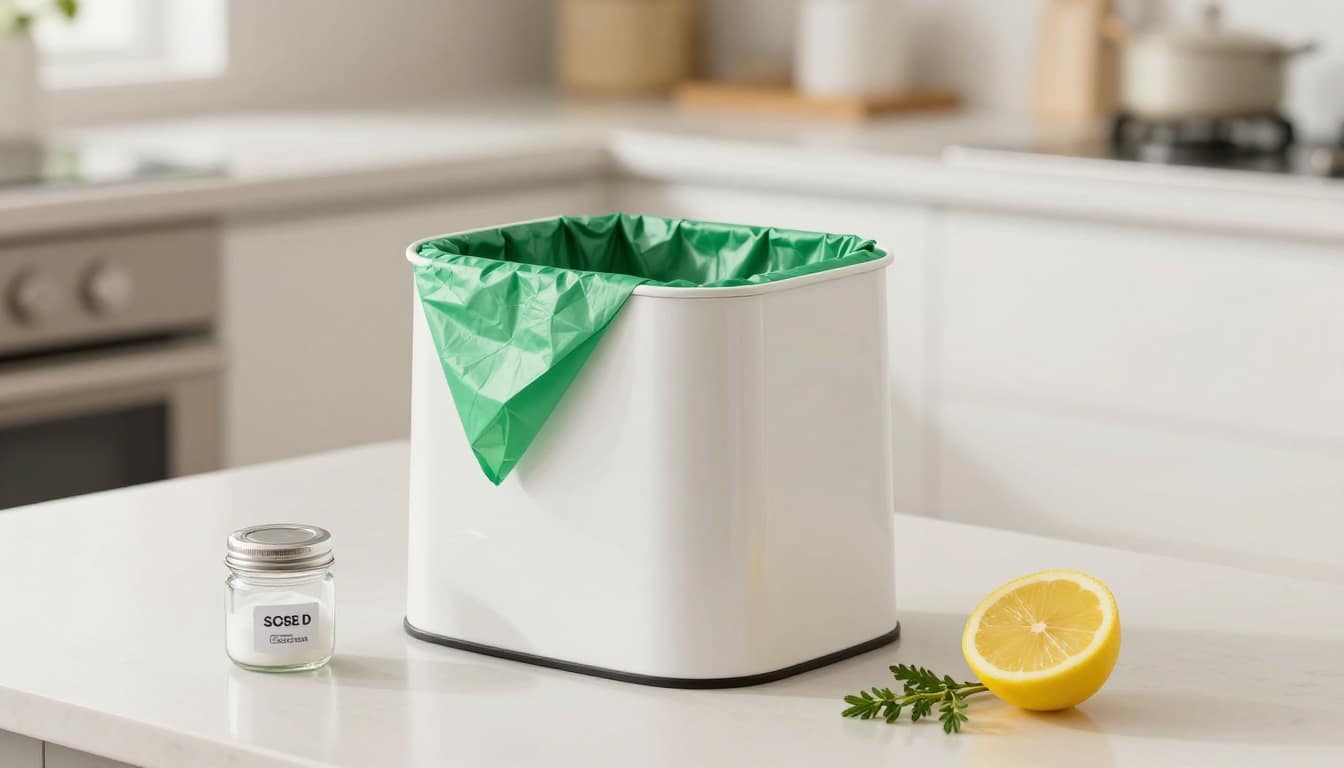
A trash can can smell “full” even when it’s barely used. That’s the rude magic of warm kitchens, damp liners, and yesterday’s leftovers. If you live in an apartment, share space with kids, or have pets that treat the bin like a rumor mill, the problem gets loud fast.
The good news is you don’t need to wash the can every other day to keep it tolerable. You need a simple system that blocks leaks, dries the inside, and adds a steady odor buffer. Once that system’s in place, between-wash freshness becomes a quick habit, not a weekend project.
Why trash can smells show up so fast (even with a lid)
Most trash smells don’t come from the big, obvious items. They come from tiny bits you don’t notice until they warm up. Odor is also clingy. It settles into condensation on the lid, the rim where the bag folds, and the bottom where liquid likes to hide.
A helpful way to think about it: the can is a small room with bad ventilation. If you add moisture and food, bacteria throw a party. The goal between washes is to keep that “room” dry and protected, so smells have less to attach to.
A few common odor triggers matter more than people expect:
- Moisture at the bottom: A single drip from meat packaging or a knocked-over drink can soak the base. Then the bag sits on it like a sponge, and the smell builds day by day.
- Food scraps exposed to air: Banana peels, onion skins, and coffee grounds don’t look scary, but they sour quickly. Warm air trapped under a lid speeds it up.
- Smears on the rim and lid: Sticky spots around the top don’t dry well. Every time the lid closes, you trap that smell again.
- The wrong bag for the job: Thin liners stretch, tear, and leak. Even a pinhole can turn the bottom of the can into a stink trap.
Once you know where odors start, the fixes feel less random. You’re not “masking” smells. You’re stopping the main sources.
Build a smell-proof setup with liners, dryness, and a cleaner lid
Between washes, your setup matters more than your scrubbing skills. A trash can that’s lined well and kept dry can go surprisingly long without turning gross. Start with the basics, then add one or two upgrades that fit your life.
The liner is your first line of defense. Use bags that match the can size, so they don’t slide down. If the bag collapses, trash touches the can walls, and odors stick around even after the bag leaves. Tie the bag closed before you take it out, because that “open walk” through the kitchen spreads smell.

Next, protect the bottom like you mean it. If your household tosses juicy items (kids’ yogurt cups, takeout containers, meat trays), add an absorbent layer under the bag. A folded paper towel works, and so does a small piece of cardboard. Replace it when you change the bag. That one move can prevent the “mystery smell” that survives even after you empty the can.
Then handle the rim and lid, because that’s where hands and trash collide. A quick wipe with warm soapy water on the rim takes seconds. If you want a faster option, keep a small pack of cleaning wipes nearby and hit the rim every few days. It’s not about perfection, it’s about removing the thin film that holds odor.
Don’t mix cleaning chemicals in the can. For example, never combine bleach with ammonia or vinegar, even in small amounts.
Finally, reduce what goes into the bin when it’s most likely to smell. Let wet items drain first. Shake out cans and bottles. Cool hot food scraps before tossing them. Those small pauses cut down on steam and condensation, which feed odor.
Keep it fresh between washes with a trash can deodorizer and a simple routine
Once the can is set up well, you can keep it fresh with a steady, low-effort routine. This is where a trash can deodorizer helps, because it fills the gap between “just emptied” and “time to wash.”
A good deodorizer doesn’t need to perfume your kitchen. It should sit close to the smell source and work quietly. Many people like a pod or clip that attaches under the lid, because it targets the trapped air right where it builds.

If you prefer low-cost basics, baking soda can help. Sprinkle a little in the bottom (under the liner) to absorb odors. Activated charcoal also works well, especially in small apartments where smells linger. If you go the DIY route, keep it contained (like in a breathable pouch) so you don’t end up with black dust on the floor.
Then pair that deodorizer with a few “tiny rules” that fit real life:
- Close off the stinkiest trash: Tie up food-heavy mini-bags before tossing them. This works well for diapers, cat litter, shrimp shells, and anything that turns sour fast.
- Use the freezer when you need to: Keep a small bag in the freezer for meat scraps or fish packaging until trash day. It sounds fussy, yet it’s oddly freeing.
- Empty on a schedule, not by vibes: In warm months, take kitchen trash out more often, even if it’s not full. Odor is about time and heat, not volume.
- Let the can “breathe” briefly: After taking out a bag, leave the lid open for a minute while you put in a new liner. That quick air swap reduces trapped funk.
If smells still creep in, check one thing: the space around the can. When a bin is wedged against a warm appliance or in direct sun, odor rises faster. Moving it a foot can make a difference.
Conclusion
Keeping a trash can from smelling between washes comes down to three things: blocking leaks, staying dry, and adding a steady odor backstop. Line the can well, protect the bottom, and wipe the rim before grime settles in. Then add a trash can deodorizer that suits your space and habits. Set the system once, and your kitchen stops reminding you about it every time the lid opens.


