
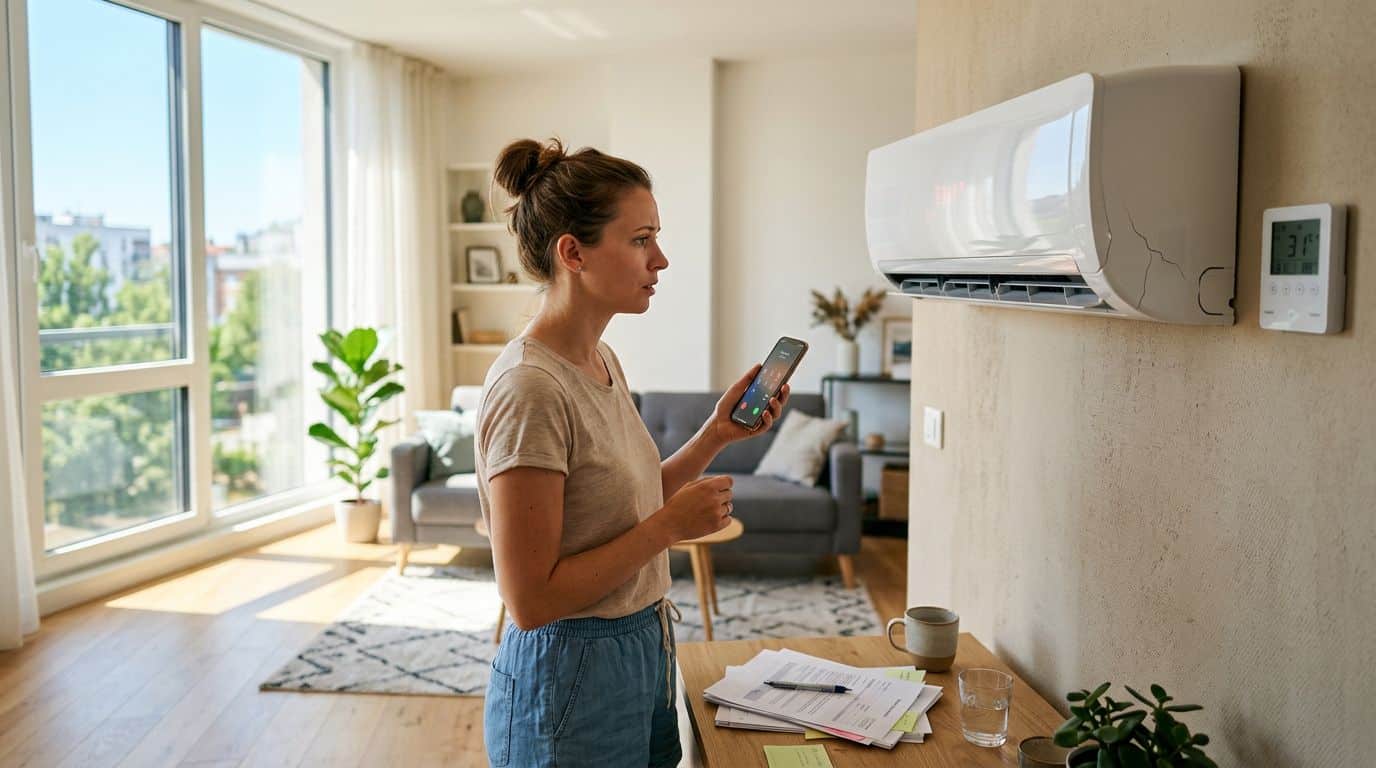
A broken air conditioner can quickly turn your rental property into an oven by midday. When the landlord stops answering your calls, the rising heat starts to feel like a personal issue.
If you are trying to sort out the specific rules regarding renter AC repair, the short answer is that it depends on your lease agreement, your state laws, and sometimes your local city ordinances. While that can feel frustrating, understanding these factors helps you identify where your strongest legal argument lives.
The next move is not to engage in a shouting match. Instead, you should focus on building a solid paper trail, performing a close read of your lease, and identifying the appropriate remedy for your specific location.
Key Takeaways
- If the AC was included in your lease or was in good working order when you moved in, the landlord typically has specific maintenance obligations to keep the appliance functioning.
- Broken cooling is mostly a state and local law issue, not a federal one.
- Put every repair request in writing, and keep photos, dates, temperature readings, and copies of every message.
- Don’t withhold rent, hire your own technician, or deduct costs unless your state or city clearly allows it.
- When the heat creates a health risk, treat it as urgent and escalate fast.
Start with the lease, then check the local rules
Most renter repair disputes turn on one boring detail: was central air conditioning part of your original lease agreement? If the lease mentions central air, a specific wall unit, or landlord-provided cooling, that matters significantly. If the air conditioning unit was working when you moved in, that also matters. A landlord does not get to act surprised by a functional appliance that came with the apartment.
There is no single federal rule that says every U.S. landlord must provide cooling. Instead, state law and local housing codes do the heavy lifting regarding landlord responsibility. The Texas State Law Library’s AC and heat FAQ says Texas has no statewide law that gives tenants a general right to climate control. That sounds grim until you get to the fine print. If the lack of cooling affects your health or safety, or if the lease includes AC, the analysis changes regarding your habitability requirements.

Local ordinances and building codes can matter just as much as broader state law. Dallas, for example, requires cooling that can keep rooms no warmer than 85 degrees and at least 15 degrees cooler than outside conditions. Chicago building codes usually do not require a landlord to install AC, but if it was provided, it generally must be maintained as part of their ongoing landlord responsibility. Florida and Ohio also tend to treat air conditioning as an amenity unless the lease says otherwise.
California is a little different in practice. When AC came with the rental, landlords usually get a reasonable time to repair it, often around 30 days for a non-urgent problem. The California AC repair rules give a useful snapshot of how that works. A heat emergency, of course, is a different animal.
One more wrinkle matters. If you have a disability or a documented medical condition that makes cooling necessary, the Fair Housing Act may support a reasonable accommodation request. In plain English, the law can treat your broken AC as more than an inconvenience. Before you fire off a message, read the lease agreement, save the original rental listing, and pull out your move-in photos. Those scraps of evidence do more work than people think.
Build a paper trail before the story changes
When your apartment is sweltering, objective facts are far more effective than emotional descriptions. Instead of complaining that it feels unbearable, state that the thermostat read 88 degrees at 3:15 p.m. and 90 degrees at 6:40 p.m. Take clear photos of your thermostat and record a short video showing the air conditioning unit running despite failing to provide cool air. If extreme outdoor temperatures are contributing to the hazard, save screenshots of the local weather forecast to support your case.
Providing formal written notice is the most critical step in protecting your rights. While a quick call to property management might seem helpful, an email creates a permanent timestamp, and a dedicated maintenance portal ensures the request is officially logged. While text messages are common, they are often informal, easy to lose, and simple for property management to dismiss later.
If you speak with someone over the phone, send a follow-up email immediately. Keep your communication professional, objective, and simple. Document when your HVAC system stopped working, note the indoor temperatures, identify any residents with specific health vulnerabilities, and clearly request a repair date. Ask for specific action rather than vague reassurance. Asking them to confirm by tomorrow when a technician will be sent is much more effective than asking them to please fix the problem soon.
Be aware that your state may have specific legal requirements for how you provide this notice. Many jurisdictions often require certified mail to ensure your request carries the necessary legal weight for potential rent withholding or lease termination. If your lease specifies a particular address for formal communication, send your request there, even if you have been casually texting your property manager for months.
A hot apartment can make you angry. Your emails should sound cooler than the room.
Maintain a dedicated folder for all your documentation, including your lease, repair requests, photos of the broken air conditioning unit, weather screenshots, and any receipts or records of missed technician appointments. If a vendor claims they stopped by and no one answered, you will need proof that you were home and waiting during the scheduled window. When a landlord stalls, the narrative often changes, so having a complete paper trail is your best defense until the HVAC system is fully restored.
Choose a remedy that matches your state
This is where many tenants run into legal trouble. They assume a broken AC justifies an immediate decision to withhold rent, book an expensive hotel, or hire a repair tech and subtract the bill from their payment. While these actions might be legal under the implied warranty of habitability, which requires landlords to provide a living space that is safe and functional, jumping to these conclusions is often the fastest road to an eviction notice. If your apartment has become untenantable due to extreme heat, you must verify your specific legal rights first.
Don’t withhold rent simply because you are frustrated. Only take this step if your local state law or city ordinance clearly allows it.
Comparing your options is essential because a safe move in one jurisdiction can be a major violation elsewhere. Review your lease agreement to see if it outlines specific protocols for requesting repairs.
| Place | Typical notice or repair window | Common remedy |
|---|---|---|
| Florida | 7 days after written notice | Rent withholding, rent reduction, or lease termination in serious cases |
| California | Reasonable time, often about 30 days for non-urgent repair | Repair and deduct, up to one month’s rent, usually no more than twice in 12 months |
| Texas | Often about 3 days to respond, up to 7 days to fix after proper notice | Repair and deduct, up to one month’s rent or $500, whichever is greater |
| Arizona | Written formal notice required | Buy fans or portable cooling and deduct reasonable cost, but not rent withholding for broken AC |
Those details are why guessing is expensive. In Arizona, a tenant may be able to buy a fan, portable AC, or window unit after formal notice, but state law does not give a general right to stop paying rent for a broken AC. In Florida, the seven-day written notice rule can open the door to stronger remedies like a rent reduction. In Chicago, tenants often get a 14-day notice demand window under the local landlord-tenant ordinance. In Texas, many repair rights depend on whether the landlord failed to act within a reasonable time after receiving proper notice.
A repair timing overview also shows why loose deadlines create problems. A vague promise to get someone out next week often turns into an indefinite delay.
If the deadline passes, the next move may be contacting code enforcement, a local housing department, legal aid, small claims court, or, in some cities, 311. If you are behind on rent, be careful. Some states make current rent status a critical part of the repair rights picture, and landlords often use this to their advantage.
Treat dangerous heat like the urgent problem it is
Not every broken cooling system case is a legal emergency, but some are. If the indoor temperature climbs into the high 80s or 90s, the problem stops being annoying and starts becoming a major health and safety risk. That danger rises fast for babies, older adults, and people with asthma, heart disease, or other medical conditions.
Start with common sense. Check the breaker once. Check the filter once. If the HVAC system still will not cool, stop playing part-time HVAC tech. Tell the landlord, in writing, that the lack of this essential service is affecting your health and safety. Use the temperature numbers you documented. If someone in the rental property has a medical need, say that plainly and attach a doctor note if you have one.
If anyone has symptoms of heat illness, such as dizziness, vomiting, confusion, or fainting, leave the apartment and get help immediately. That is not the moment to win an argument by staying put. It is the moment to get somewhere cool and safe.
You can also ask for temporary relief while the landlord restores the cooling system to proper working order. Requesting a portable air conditioning unit, a window unit, hotel reimbursement, or rent reduction may be an option, depending on your lease and tenant rights. Save every receipt. In some jurisdictions, formal notice can support buying temporary cooling equipment. If your local code dictates a maximum temperature, it can give your complaint sharper teeth. If this is a building-wide problem, neighbors’ reports can help show the issue is real and that the air conditioning unit in your home is not in working order.
The landlord may still act as if you are asking for a luxury. You are not. You are asking for the essential services included in your rental property agreement, or for the remedy tenant rights allow when your home becomes unsafe.
Frequently Asked Questions
Is a landlord legally required to provide air conditioning?
Generally, there is no federal law requiring landlords to provide air conditioning. However, your right to cooling often depends on your specific lease agreement, local city ordinances, and state habitability laws. If the AC was provided at the start of your lease, landlords are typically responsible for maintaining it as part of their upkeep obligations.
What should I do if my landlord ignores my repair requests?
Start by building a formal, objective paper trail that documents all communication regarding the broken unit. Stop relying on phone calls or texts, and send formal written notices—or certified mail if required by your state—that include specific dates, temperature readings, and clear requests for action. Having this documentation is essential if you eventually need to involve local code enforcement or legal aid.
Can I withhold rent because the AC is broken?
Do not withhold rent unless your specific state or local laws explicitly authorize it. Withholding rent prematurely is a common mistake that can lead to an eviction notice regardless of how hot your apartment is. Always verify the legal remedies for your jurisdiction, such as repair-and-deduct options or rent reduction, before taking financial action.
What qualifies as a heat emergency?
If indoor temperatures climb into the high 80s or 90s, the situation becomes a legitimate health and safety risk, especially for vulnerable residents like children, the elderly, or those with medical conditions. In such cases, document your medical needs, report the danger clearly to your landlord, and seek a cool environment immediately if anyone shows symptoms of heat illness.
Conclusion
A broken AC is miserable, but the worst move is guessing. Your best case is built by understanding your tenant rights as outlined in your lease agreement, providing formal written notice, keeping careful records, and applying the specific remedy your state or city allows.
When the apartment feels like an oven, stay calm on paper and firm in action. A strong paper trail often does more than a loud complaint ever will. You do not need to sound dramatic. You need to sound ready, prepared, and informed about the obligations established in your lease agreement.
This post may contain affiliate links. If you make a purchase through these links, I may earn a small commission at no extra cost to you.


