
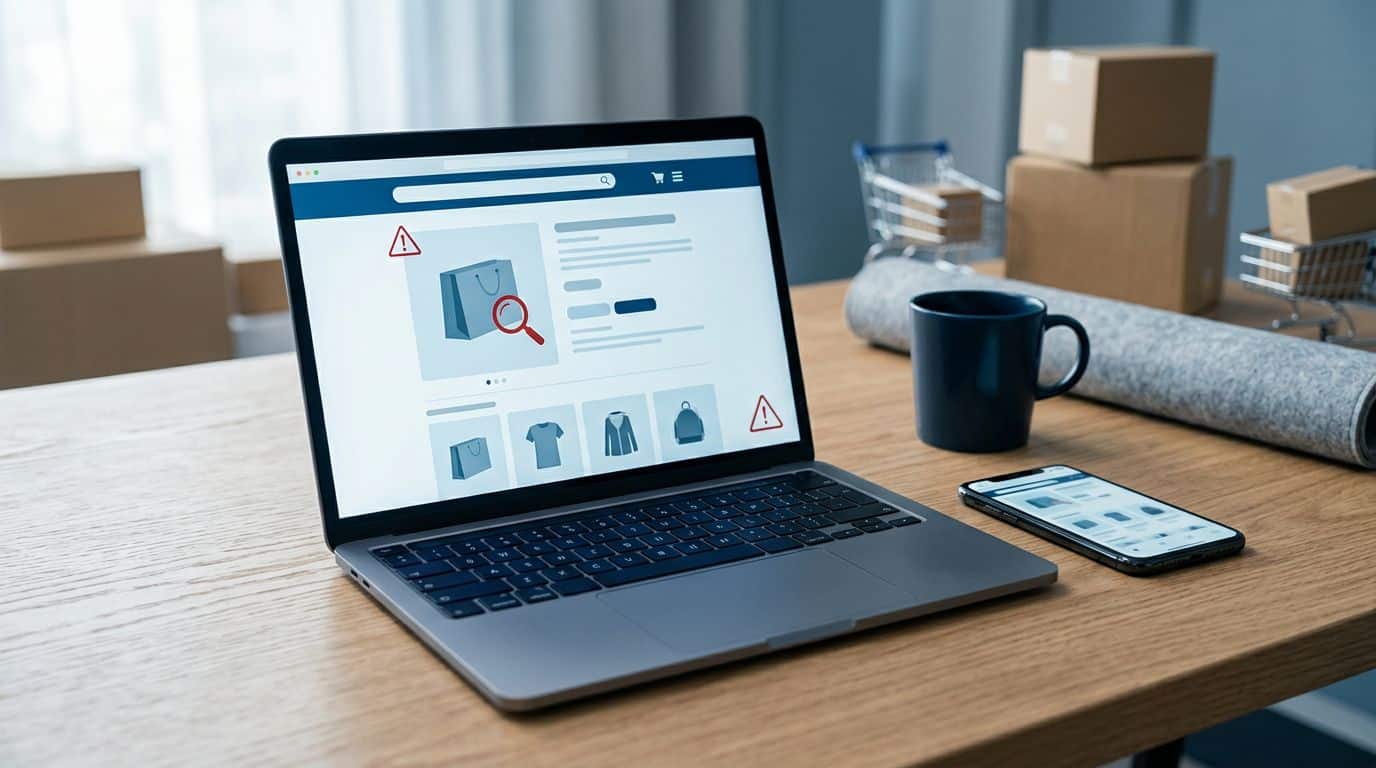
The easiest shopping scam to fall for is the one that looks ordinary. A clean homepage, a countdown timer, a price that feels like luck, and suddenly your guard drops.
That’s why fake online stores keep working. Warnings in 2026 keep showing the same pattern: cloned sites, AI-written copy, and social ads that push you to buy before you think.
If a store is unfamiliar, slow the whole scene down. A few calm checks can save your card, your data, and your afternoon.
Start with the deal itself
Start with the offer, because the offer usually gives the game away. If a hot item is 70 percent off on one obscure site while every known retailer is near full price, assume there is a reason. The University of Colorado’s warning signs for fake online stores put this near the top for good reason.
Scam shops love urgency because urgency shuts off judgment. “Only 3 left” and “sale ends in 10 minutes” are cheap stage props. Compare the price with a familiar seller, or at least search the product name across a few stores. If the gap is wild, don’t treat it as a win. Treat it as a test.
A real bargain can happen. A miracle deal from a store you’ve never heard of is something else.
Read the web address like it matters
The web address deserves more attention than the banner image. Fake stores often hide in slight misspellings, strange brand mashups, or domains that look almost right on a phone screen. Republic Bank’s guide to suspicious web addresses gets the first rule exactly right: read every part of the URL, not only the name you recognize.
A padlock is not a character reference.
“https” means the connection is encrypted. It doesn’t mean the seller is honest. Search the contact address, check whether the email matches the domain, and see if the phone number works. If the site claims to be based in Chicago but the address leads to a random house or an empty lot, the mystery is over.
One more thing, don’t trust a search result just because it showed up first. Paid placement can put a fake shop right where your eyes land first.
When the storefront feels a little off
A fake shop can look polished at first glance, which is why the small details matter. Blurry product photos, copied descriptions, odd grammar, broken category pages, and return policies that read like they were pasted from three different sites are common tells. One rough edge can happen on a real small business site. Five at once is a pattern.

Scammers also borrow trust instead of building it. They steal images, imitate brand colors, and add social icons that lead nowhere. A useful breakdown of common red flags in fake e-commerce sites points to stolen product photos and odd domain patterns as frequent clues. If the site feels assembled in a hurry, believe that feeling.
The same goes for policies. Shipping, returns, and privacy pages should sound like they belong to the same business. If they don’t, keep your wallet closed.
Look for proof outside the site
The reviews on the site itself don’t mean much. Anyone running a scam can write “Amazing quality” fifty times and call it a reputation. Look for proof away from the storefront. Search the store name with “scam”, “reviews”, or “complaint”, and see whether real people mention missing orders, fake tracking numbers, or silence after payment.

AARP’s advice on reviews and scam reports is plain and sensible: don’t trust a store because it appeared high in search, especially if it is sponsored. Check whether anyone talks about the business on social media, Reddit, Trustpilot, or the BBB. If the store has no history, no chatter, and no independent reviews, that silence says plenty.
Real businesses leave fingerprints. Fake ones often leave a vacuum.
Let the checkout reveal the truth
Even after all that, the checkout page usually tells the truth. If the only payment options are bank transfer, crypto, gift cards, or a money app with no buyer protection, leave. Real stores want to get paid. Scam stores want payment that can’t be pulled back. A credit card gives you the best shot at disputing charges if things go bad.
Watch what the site asks for, too. A store selling socks does not need your Social Security number. It usually doesn’t need you to create an account before showing shipping costs. When a checkout asks for too much, too soon, it isn’t being careful. It’s being hungry.
This is the part many people skip because they feel close to done. That’s the trap. The last minute before purchase is often the best minute to back out.
The pause that saves you
Spotting a fake store is rarely about one dramatic clue. It’s usually a pile of smaller ones, the strange price, the crooked URL, the copied photos, the empty reputation, the checkout built for disappearing acts.
That short pause before you buy is still your best defense. Skepticism is cheaper than a charge dispute, and much less annoying.


