
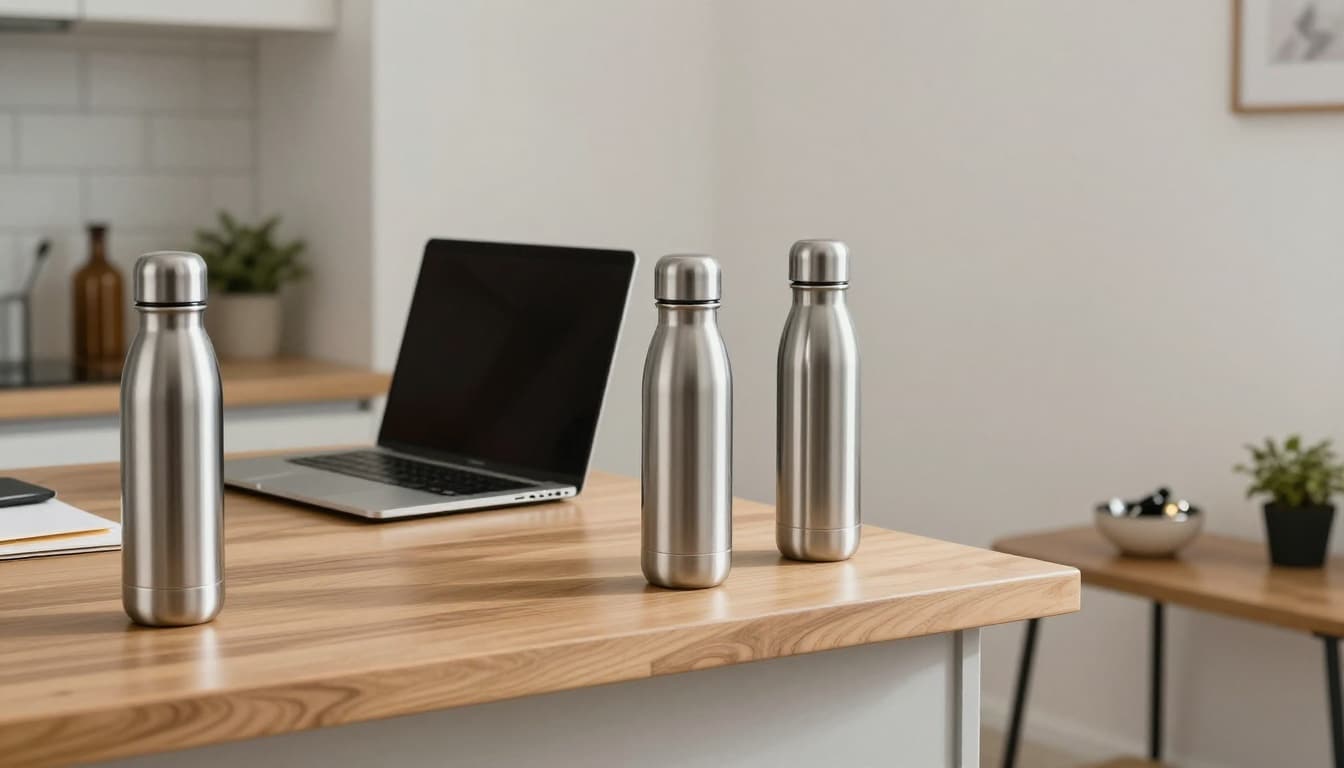
You bought a good reusable water bottle. It has a satisfying lid click. It makes you feel like a person who drinks water on purpose. Then it disappears, like a sock in the dryer, except you need it to function.
If you’re trying to stop losing your water bottle, you don’t need more willpower. You need fewer places to put it. The goal is simple: your bottle should always be in one of three approved locations at home, and nowhere else.
This 3-spot “home base” system is low-effort, commuter-friendly, and forgiving when life gets loud.

Why you keep losing your water bottle (and why it’s not a character flaw)
Most people don’t lose a water bottle, they lose track of the last moment they had it. The bottle isn’t sneaky, your day is just crowded. You walk in holding groceries, a laptop bag, and someone’s tiny shoe, then you set the bottle down in the first empty spot like your brain is clearing a browser tab.
The problem is “landing zones.” When your home has ten acceptable places to put a bottle, you’ll use all ten. Counter, nightstand, couch arm, bathroom sink, window ledge, inside the fridge door, next to the plants (the irony), or that one shelf you never look at again. More options feel freeing, but they create a scavenger hunt.
There’s also timing. Water bottles get set down mid-task. You take a sip while answering a text, then you keep walking, and your bottle stays behind like a confused sidekick. Later, you “remember” it, but your memory points to a vague area, not a location.
Finally, bottles are quiet. Keys jingle. Phones buzz. Water bottles just sit there, blending into the background until you’re already late.
So the fix isn’t a pep talk. It’s a rule your tired brain can follow: the bottle only lives in three spots, and those spots are set up to make the right choice easy.
The 3-spot home base system that actually works
Think of this as a tiny transit map. Your bottle travels between three stations, and it doesn’t stop anywhere else. When you build the stations, your job becomes simple: move the bottle to the next station when you’re done using it.
Before you choose your spots, pick your “main floor.” If your home has multiple levels, choose the level you enter and exit from most. The bottle’s home base stays there. If it goes upstairs, it comes back down the next time you pass the stairs, not “later.”
Here are the three spots, with the logic behind each one:
- The Wash Spot (the moment you walk in): This is where the bottle goes when you get home, even if you plan to drink more later. Put it near the sink or dishwasher, and make it physically easy to place, like a small tray or an empty corner you keep clear on purpose.
- The Ready Spot (clean, filled, and boring): This is where the bottle waits when it’s clean. It can be a drying mat, a cabinet shelf, or a section of counter that stays uncluttered. The point is that “ready” looks the same every time, so you can spot it fast.
- The Launch Spot (next to what you already never forget): Put this by your keys, wallet, work badge, or diaper bag, whatever is already chained to your life. A small basket, hook, or entry table works well. If your bottle is leaving the house, it starts here, like an obedient little astronaut waiting by the airlock.
Now add one rule that makes the system work: if the bottle is not in your hand, it must be in one of the three spots. No coffee table. No bedside stand. No “just for a second” on the washer.
Set up the spots in under 15 minutes
Keep it simple. You’re not redecorating. You’re reducing decisions.
Place a tray or small bin at the Wash Spot and Launch Spot. This creates a visual boundary, which matters more than people admit. A flat surface invites clutter, but a container suggests a job.
At the Ready Spot, decide what “ready” means in your house. For many people it’s “clean and empty.” For others it’s “clean and filled.” Choose one and stick to it so you don’t start each morning with a tiny negotiation.
If you share a home, tell people the new rule in one sentence: “If you see my bottle out, it goes to one of the three spots.” Most people will respect a system that sounds like it has labels.
Make the habit stick on busy mornings, gym nights, and chaotic weekends
A good system survives your worst day. That means it needs a reset plan for when you forget, and a script for when life interrupts.
Start with a 30-second “closing shift” each night. You don’t need a full clean. Just get the bottle back into the pipeline. If it’s dirty, move it to the Wash Spot. If it’s clean, move it to the Ready Spot. If you’re leaving early, move it to the Launch Spot. This is less about cleanliness and more about location certainty.
Mornings get easier when you attach the bottle to something you already do. Many people check keys without thinking. Pair that moment with a bottle check at the Launch Spot. If the bottle isn’t there, you know exactly where to look next, not everywhere.
If you commute, build one “parking rule” for the bottle when you get home. Don’t carry it around while you unpack. Don’t set it on the counter while you answer a question. Walk in, place it at the Wash Spot, then do the rest. This single move is what helps you stop losing water bottle after water bottle.
When you break the rule (because you will), use a calm recovery line: “Bottle goes home.” No guilt, no scavenger hunt rage. Just walk it to the nearest correct spot. The system wins through repetition, not perfection.
If you want two small upgrades that reduce mistakes, pick one or both:
- Add a visual cue: A bright silicone band, a big name label, or even a specific color bottle makes it easier to spot in a messy room. The goal is quick recognition, not aesthetics.
- Add friction to wrong places: If you always leave it on the couch side table, put something there that blocks the habit, like a lamp base you can’t move easily or a small basket that’s “for remotes only.” You’re not relying on self-control, you’re changing the environment.
Over time, the bottle stops being a wandering object and starts being part of your exit routine. Like shoes by the door, it becomes boring, and boring is reliable.
Conclusion
If you want to stop losing your water bottle, don’t chase it, assign it a home. With a Wash Spot, a Ready Spot, and a Launch Spot, you always know where it is, even on days when your brain feels like a browser with 47 tabs open. Set the three spots today, follow the one rule, and run the 30-second reset at night. The next time you leave the house, your bottle should be waiting like it actually pays rent.


