
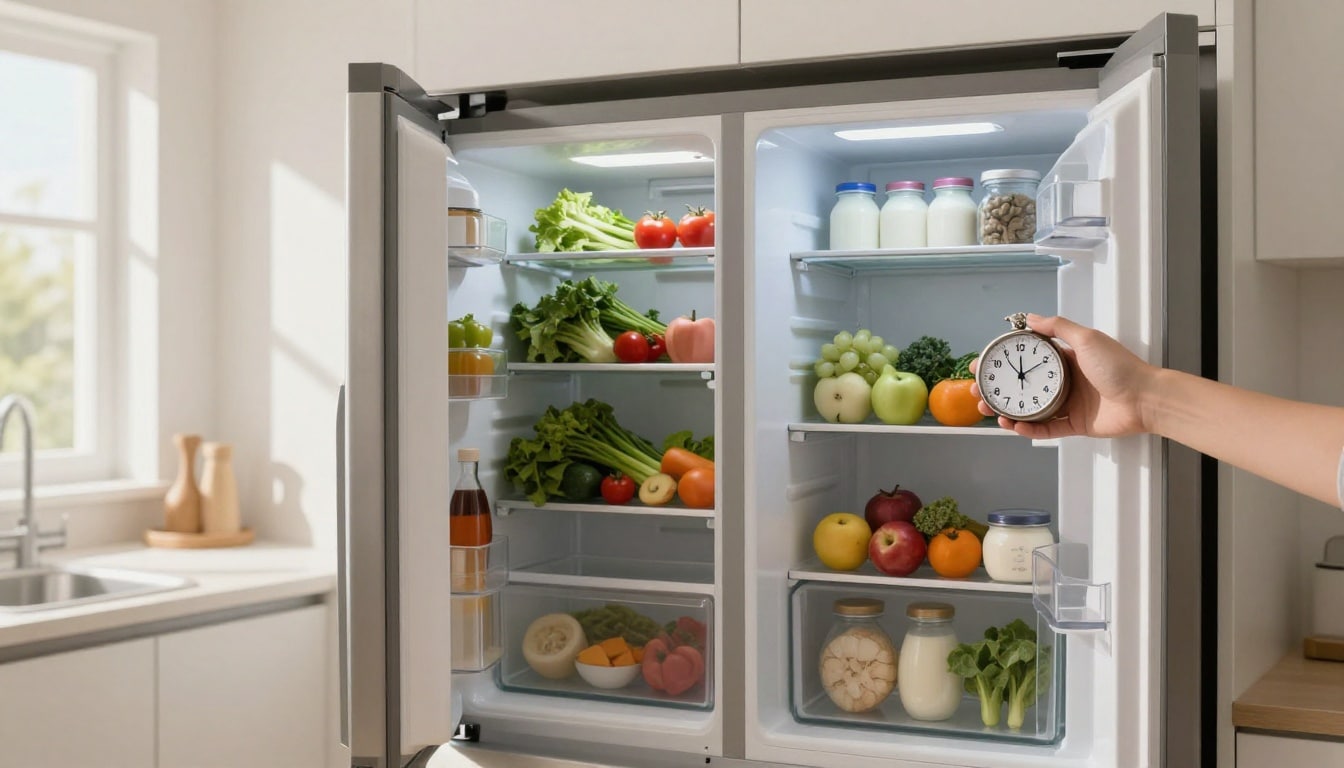
If your fridge has ever produced a surprise bag of slimy spinach, you’re not alone. Most of us don’t “waste food” on purpose. We just lose track. A container gets shoved behind the milk, leftovers go quiet, and a cucumber starts a new life as a science project.
A fridge audit fixes that, not with a full Sunday reset that eats your whole afternoon, but with a tiny weekly habit that keeps the week from going sideways.

Why a 5-minute Sunday fridge audit works (even for busy people)
A fridge isn’t a pantry with a door. It’s more like a busy parking garage where new arrivals keep blocking the cars that need to leave first. If you don’t do a quick sweep, perfectly good food gets trapped in the back until it’s too late.
The power of a 5-minute fridge audit is that it matches real life. You don’t need new bins, fancy labels, or a color-coded system that collapses by Wednesday. You need a short, repeatable moment when you look at what you already paid for and decide what happens next.
Sunday is ideal because it sits right before many people shop. It’s also the day when random odds and ends pile up: half a jar of sauce, two lonely tortillas, one lemon that’s doing its best. A quick check gives you a plan before you buy duplicates.
This is also where the “audit” part matters. You’re not judging yourself. You’re collecting clues. If you notice the same foods dying in the crisper each week, that’s useful data. A bigger, occasional waste audit can help you spot patterns, and this walkthrough on doing a food waste audit explains the idea in a simple, family-friendly way.
Food waste adds up for budgets and for the bigger picture, and if you want the broader context, Harvard’s Nutrition Source has a clear overview of tackling food waste at home. For day-to-day life, though, five minutes is enough to change what you eat this week.
The 5-minute Sunday fridge audit routine (set a timer)
This works best when it’s almost silly how small it is. Set a timer for five minutes. You’re not deep-cleaning. You’re scanning, choosing, and setting yourself up for easy wins.
Before you start, grab one bowl or small tray. This is your “use-first” spot for the week. If you have roommates, announce it like it’s a community bulletin board: food in this zone is on deck.
Now do the audit in one pass. Keep it moving.
- Minute 1, the front shelf scan: Pull out anything already open, half-used, or cooked. Think leftovers, open hummus, that pasta box you “resealed” with vibes. If it’s still good, it goes to the use-first spot. If it’s clearly gone, let it go.
- Minute 2, the produce triage: Open the crisper and look for the “use me now” items. Soft berries, greens that need attention, herbs that are fading. Move the urgent produce up front where you’ll see it. If you’re unsure how to arrange zones so you stop losing food in the back, this guide on organizing your fridge to minimize food waste is helpful, even if you only borrow one idea.
- Minute 3, the protein check: Find raw meat or fish and confirm you have a plan for it soon. If you won’t cook it in time, move it to the freezer. This is not a moral moment. It’s a calendar moment.
- Minute 4, the “tiny leftovers” sweep: Hunt for containers with one serving left. These are the ones that get ignored because they aren’t “a meal.” Put them together so they become lunch, a snack plate, or a quick add-on to dinner.
- Minute 5, the plan sentence: On a sticky note (or your phone), write one sentence: “This week, we will use: ____.” List three to five items from the use-first spot. That’s it. The note is your future self’s memory.
If you like a bit more structure, Stop Food Waste has a short guide called Fridge Reality Check that can add a little accountability without turning your kitchen into homework.
Make the fridge audit pay off all week (without more chores)
A Sunday fridge audit is the spark. The follow-through is what saves the food. The goal is to make the “use-first” items easier to grab than the shiny new groceries.
Start with visibility. If you can’t see it, you won’t eat it. Put the use-first bowl at eye level, not in a drawer. Move new groceries down or to the side. This feels backwards at first, then it feels like you’ve discovered gravity.
Next, reduce the number of decisions dinner requires. You’re not meal planning in detail. You’re giving yourself a few obvious moves.
Here’s a simple way to convert your use-first pile into meals without a big plan:
| If you have… | Easiest use this week | Low-effort example |
|---|---|---|
| Cooked leftovers | Lunches first | Reheat and add a salad or fruit |
| Wilting greens or herbs | Cook them | Toss into eggs, soup, or pasta |
| Extra dairy (yogurt, cheese) | Breakfast or snacks | Yogurt bowl, quesadilla, toast |
| Open sauces or dips | Build a “base” meal | Rice bowl, wrap, sheet-pan veg |
| Soft fruit | Bake or blend | Smoothie, oatmeal topping |
If you live with other people, make one small agreement: nobody puts a new item in front of an open one. That’s it. No speeches. Just a house rule as basic as replacing the toilet paper.
Also, give yourself a midweek “micro-check” that takes 30 seconds. On Wednesday, open the fridge and look only at the use-first spot. If something still hasn’t moved, choose one action: eat it today, freeze it, or pair it with something easy. This keeps the Sunday audit from turning into a guilt museum by Friday.
Finally, shop like a person who owns a fridge, not like a person starring in a grocery haul. If you already have spinach, don’t buy more spinach. Buy the thing that makes spinach useful, like eggs, pasta, or a rotisserie chicken. If you need ideas to cut back on overbuying and get more mileage out of what you have, Ends + Stems has practical, no-shame tips to reduce food waste that pair well with this weekly habit.
Conclusion
A 5-minute Sunday fridge audit is small on purpose. It keeps good food visible, turns “I’ll deal with it later” into a quick plan, and makes your next grocery trip smarter. Set the timer, gather the almost-forgotten items, and write one sentence about what gets used first. Next Sunday, you’ll open the fridge and see food, not mysteries.


