
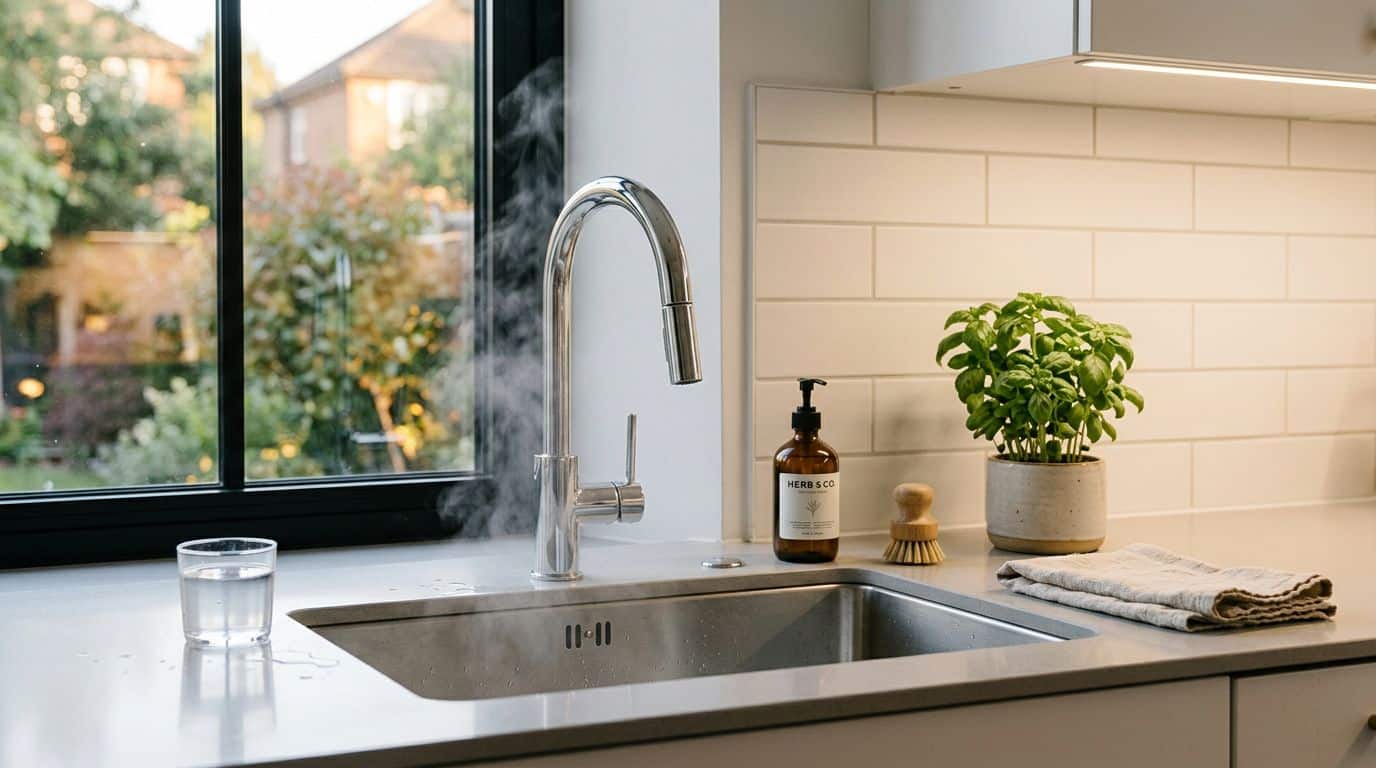
A kitchen sink smell has a special talent. It waits until the lights are off, the house is quiet, and you’re finally done cleaning, then it drifts up like a rude bedtime story.
The good news is that most overnight sink odors come from a few predictable spots. You don’t need fancy tools, and you usually don’t need harsh chemicals. What you need is a quick routine that removes the stuff that feeds the smell, then blocks what’s left from gassing off while you sleep.
Why your kitchen sink smells worse overnight (even if it seemed fine earlier)
Sink odor isn’t always about a “dirty sink.” More often, it’s about a hidden film of old food and grease that clings to damp surfaces. During the day, you run water, wash dishes, and rinse cups. That steady flow dilutes smells and pushes some gunk along. At night, everything sits still. The drain becomes a closed room, and the odor has time to build.
Temperature also plays a part. Warm kitchens (dishwasher heat, dinner cooking, indoor heating) can make odors rise faster. And if you have a garbage disposal, the rubber splash guard and the grinding chamber can hold tiny bits of food. Those bits don’t look dramatic, but they don’t need to. They just need time.
Sometimes the smell is a plumbing issue, not a cleaning issue. The P-trap (the curved pipe under the sink) is supposed to hold water. That water acts like a plug that blocks sewer gas. If that trap water evaporates (common in guest units or unused sinks), or if there’s a venting issue, the odor can creep up even when the sink “looks” clean. For a solid explanation of common drain odor causes, see this overview on causes of a smelly sink drain.
One more sneaky source is the overflow channel (on many sinks with a little hole near the top). That channel stays damp, collects grime, and almost never gets scrubbed. In other words, it’s a tiny cave for smells.
A before-bed routine that stops sink odor by morning
Think of this like putting the kitchen to sleep with its mouth closed. You’re removing the food source, washing off the odor film, and leaving the plumbing in a “sealed” state. The whole thing can take 10 minutes.
- Clear the drain basket and rinse the sides: First, remove any strainer or basket and dump it. Then rinse the sink walls and the drain opening so loose crumbs don’t become tomorrow’s stink. If you have stuck-on grease near the drain, add a drop of dish soap and rub it with a sponge.
- Flush with hot water and dish soap: Next, run very warm water for 30 to 60 seconds. Add a small squeeze of dish soap as it runs. This helps break up greasy residue that traps odors. If you’re on septic, this gentle step is often a better first move than strong cleaners.
- Deodorize the drain with baking soda and vinegar (when it fits your plumbing): For many homes, the classic combo helps loosen soft buildup and freshen the drain. Pour baking soda into the drain, follow with vinegar, let it foam briefly, then rinse with hot water. Real Simple has a clear walkthrough of cleaning a sink drain with baking soda and vinegar if you want the exact rhythm.
- Scrub the “smell ring” you can’t see: Odor loves the underside of stoppers and disposal splash guards. Wipe them with hot, soapy water. If the rubber guard lifts out, wash it in the sink like any other grimy dish, because that’s what it is.
- Leave the drain in a low-odor state overnight: Finally, run a short rinse, then shut the faucet off. If the smell is mild, simply placing the clean stopper in the drain can reduce what drifts up. If you don’t like sealing it fully, leave the strainer in place so air still moves a bit.
If the odor disappears while water runs but returns a few minutes later, the problem is usually inside the drain path, not on the sink surface.
One safety note that saves headaches: don’t mix cleaners. In plain terms, don’t pour bleach after vinegar (or the other way around). If you used something strong earlier, rinse well and wait.
If the kitchen sink smell returns, check these hidden spots (and fix them fast)
When a kitchen sink smell comes back the next night, it’s usually because one “odor shelf” is still dirty. That doesn’t mean you failed. It means you found the sink’s favorite hiding place.

Photo by Wallace Chuck
Start with the garbage disposal, if you have one. Food tends to stick under the rubber baffle and around the inner rim. Unplug the unit (or switch it off at the breaker), then scrub the baffle and rim with a long-handled brush and hot, soapy water. After that, grind a few ice cubes to knock loose residue, then rinse. Citrus peels can add a nice scent, but don’t rely on them as the “cleaning.” A lemon is perfume, not a mop.
Next, check the overflow hole. You can clean it with a small bottle brush or a bent pipe cleaner dipped in soapy water. Gunk in that channel can smell like old dishwater because that’s basically what it is. Rinse the channel by pouring a small amount of warm water into the overflow opening if your sink design allows it.
If the odor is more like sewer gas (sharp, swampy, or eggy), look under the sink. The P-trap should have no leaks and should hold water. If you rarely use the sink, run water for a minute to refill the trap, then see if the smell improves overnight. For a broader set of fixes and what they mean, this guide on how to stop your kitchen sink from smelling is a helpful cross-check.
Still getting that nightly stink after cleaning the disposal and overflow? At that point, a plumber visit can save time. A venting problem, a loose trap connection, or a partial blockage farther down the line won’t always show up as a slow drain. It can show up as an odor that keeps “coming back from the dead.”
Conclusion
An overnight kitchen sink smell usually comes from trapped food film, a dirty disposal area, or a drain that’s venting odor when everything goes still. A short before-bed routine handles most cases, and a quick scrub of the hidden parts finishes the job. If the smell reads like sewer gas and won’t quit, trust your nose and check the trap and venting next. Tonight, aim for a sink that goes to sleep clean, quiet, and boring.


