
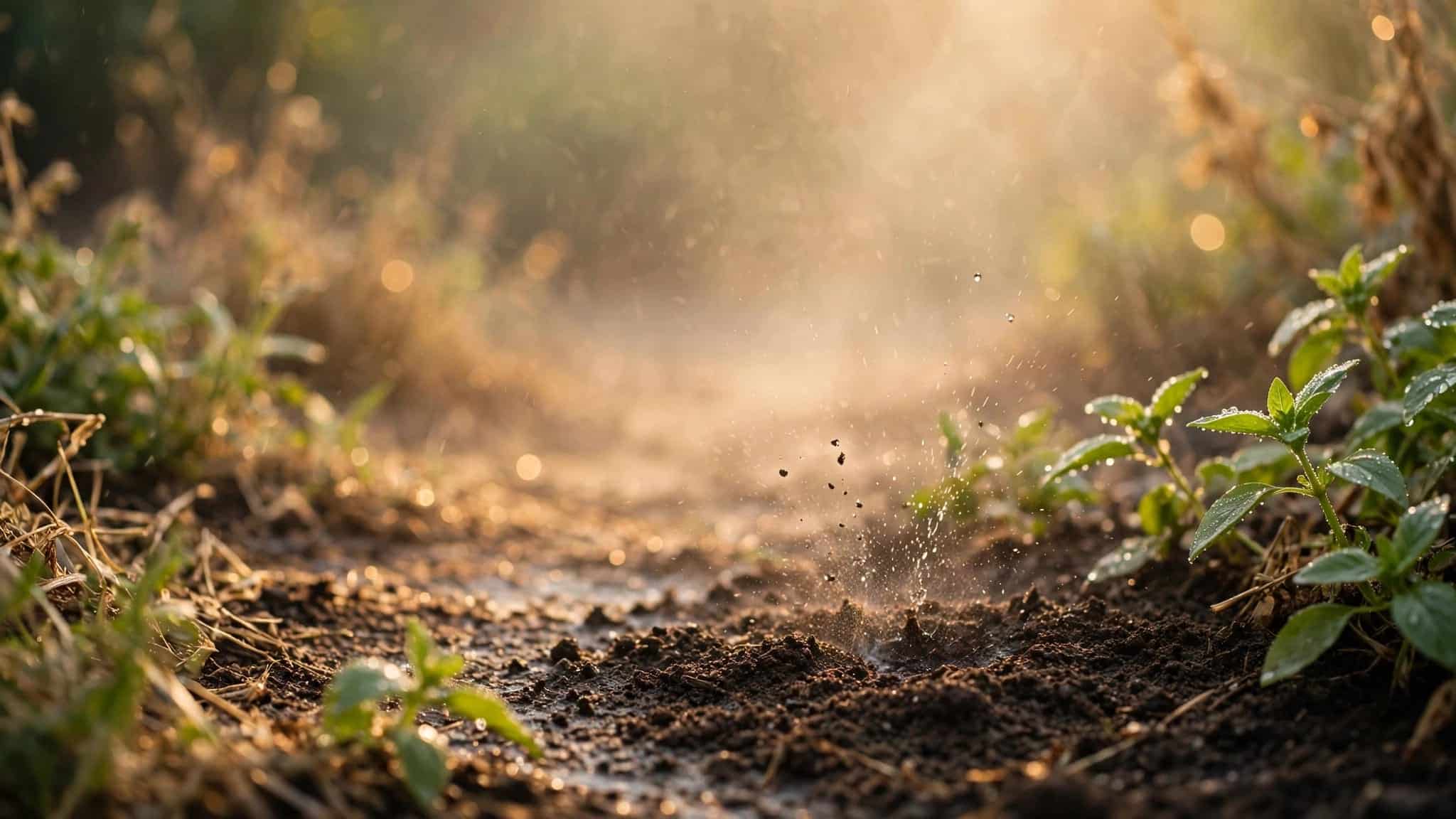
The first drops hit a dry garden, and suddenly the air smells as though someone has opened a bag of fresh earth. How does one explain the smell of rain when water itself has no noticeable odor?
Much of that familiar earthy scent comes from the ground beneath your feet, where plant compounds and soil bacteria have been preparing the ingredients. Raindrops carry those ingredients into the air, creating the scent of rain, while thunderstorms can add a sharper smell of their own.
The explanation starts with a rather poetic name for this process in the dirt: petrichor.
This post may contain affiliate links. If you make a purchase through these links, I may earn a small commission at no extra cost to you.
Key Takeaways
- The earthy smell after rain is called petrichor, an aroma produced by a mix of compounds rather than a single chemical.
- Plant compounds and geosmin from soil bacteria can collect in dry ground before rain arrives.
- Raindrop impacts can release tiny airborne droplets that carry these compounds into the air, though the effect depends on the surface and rainfall conditions.
- Wind can bring the scent of nearby rain, while thunderstorms may add a sharper ozone smell. How pleasant rain smells can also depend on personal memories and associations.
What Is the Smell of Rain Called?
The earthy scent associated with rain falling on dry ground is called petrichor. It’s a useful word for a familiar experience: that warm, slightly mineral smell that arrives when a shower interrupts dry weather.
Australian researchers Isabel Joy Bear and Richard Thomas coined the term in 1964. Their paper, “Nature of Argillaceous Odour,” appeared in Nature. As CSIRO’s history of petrichor explains, they investigated the distinctive odor released when dry rocks and soil encountered moisture.
The word petrichor combines the Greek words petra, meaning stone, and ichor, the fluid said to flow through the veins of the gods. That’s an unusually grand description of wet dirt, but it does capture how distinctive the experience feels.
It describes an aroma rather than one chemical. Several compounds contribute, and their proportions affect what reaches your nose.
Petrichor refers to the scent after a shower, while the sharp smell before a thunderstorm has different chemical contributors. We casually group both under “rain smell.”
Where the Earthy Aroma Begins
The ingredients are already present before the first drop lands. Two important sources are compounds associated with plants and a chemical compound produced by microorganisms in the soil.

Plant Oils Build Up During Dry Weather
Plants release oils and other organic compounds that can collect on surrounding soil and rock surfaces. During dry periods, these materials can accumulate rather than being regularly washed away.
Porous materials provide small spaces where compounds can remain. When moisture arrives, some of that stored material becomes airborne and contributes to the earthy scent.
You can think of damp soil as holding ingredients until conditions change. A rain shower brings moisture and physical disturbance, helping those ingredients become noticeable.
This helps explain why a shower after a dry spell often smells especially strong. There has been time for aromatic material to collect before the ground gets wet again.
Soil Bacteria Produce Geosmin
A major contributor to the earthy note is geosmin, a chemical compound produced by certain soil bacteria. These include bacteria in the genus Streptomyces.
The American Chemical Society’s petrichor guide describes how soil bacteria contribute geosmin to rain’s familiar aroma.
These bacteria don’t wait for a shower and then manufacture a whole garden’s worth of scent in seconds. Geosmin can already be present when the drops arrive.
Rain changes how existing compounds reach the surrounding air. That distinction matters: the sudden smell doesn’t require equally sudden biological activity. Your nose is noticing material that was there before you noticed it.
How Raindrops Carry the Scent Into the Air
Having aromatic compounds in the ground explains only half the story. Moisture also needs to carry them into the air, where you can smell them.

Tiny Bubbles Form Beneath the Drop
When a raindrop strikes suitable ground, it spreads out and can trap tiny air bubbles beneath it. The bubbles rise through the drop and burst at its surface.
The bursting bubbles eject very small droplets into the air. These airborne droplets are called aerosols, and they can carry material picked up from the ground.
A useful comparison is the fine spray above a fizzy drink. Bubbles reach the surface, burst, and send small droplets upward. Rainwater can produce a related effect on porous ground, though the bubbles form through impact rather than dissolved gas.
This gives soil compounds a route into moving air. Once airborne, they can contribute to petrichor, though the effect varies with conditions.
The Process Depends on the Surface and Rainfall
In 2015, MIT researchers used high-speed cameras to investigate this process. Their study of rainfall and aerosols showed how impacts on porous surfaces could release tiny droplets.
The researchers found that surface properties and impact speed affected how many aerosols formed. Under their experimental conditions, lighter or moderate rainfall could produce more droplets than heavy rainfall.
That means a heavier downpour doesn’t automatically produce a stronger earthy smell. The conditions that release scent matter as much as the amount of water falling.
The mechanism also shouldn’t be applied identically to every surface. A patch of soil behaves differently from a smooth, nonporous surface.
Why You Can Smell Rain Before It Reaches You
Sometimes the aroma arrives while your own street is still dry. That can feel like an impressive weather prediction, but air can carry chemical clues ahead of the rain.
Wind Can Bring the Smell of Wet Ground
A shower doesn’t fall everywhere at once. Rain may already be hitting soil nearby while your location remains dry.
Wind can carry scent-bearing air away from that wet ground. You experience the aroma before the rain reaches you because the air has traveled ahead of the shower.
This doesn’t mean your nose has detected water waiting inside a cloud. It has detected compounds carried by air that has passed through a rain-affected area.
Air movement is central to this sequence, just as it is to how weather patterns develop. Where the rain is falling and where the wind is blowing both affect what you notice.
Thunderstorms Can Add a Sharper Ozone Smell
An approaching thunderstorm can bring a sharp, clean-seeming odor. Unlike earthy petrichor, which can include geosmin, ozone has a more pungent quality.
It contains three oxygen atoms per molecule, while the oxygen we normally breathe contains two. Lightning can contribute to its formation through atmospheric chemical reactions.
As MPR News explains about storm scents, strong storm downdrafts can carry ozone-rich air toward the ground. That helps explain why a thunderstorm may smell different before the first local drops fall.
A smell isn’t a reliable warning system, though. Recognizing dangerous storm clouds provides useful context, but official warnings and audible thunder matter more than whether the air smells unusual.
Why Your Nose Notices Such Small Amounts
Geosmin has an earthy odor that the human sense of smell can detect at very low concentrations. This sensitivity helps explain why a small amount can give the air a noticeable character.
Research on geosmin odor sensitivity has reported detection at concentrations measured in parts per trillion. However, published thresholds differ, so there isn’t one universal number that describes everyone’s experience.
A detection threshold is the concentration at which someone can notice a substance under particular testing conditions. It doesn’t guarantee that everyone outdoors will detect the same amount.
Once odor molecules enter your nose, they interact with smell receptors. Those receptors send signals that your brain interprets as an odor. This process helps distinguish damp earth from other scents.
Being sensitive to this compound doesn’t mean you’ll notice petrichor equally during every shower. The compounds still need to reach you, and their concentration depends on the conditions around you.
There is also an interesting difference between detecting a smell and enjoying it. Your nose may register the scent readily, but its pleasantness involves your associations with it.
The chemical helps explain why you notice the scent. It doesn’t, by itself, explain why it might remind you of a garden, a holiday, or an afternoon spent watching rain through an open window.
Why the Smell Can Feel So Pleasant
For many people, rain’s earthy aroma brings a sense of relief. After hot, dry weather, a shower can mean cooler surroundings and a welcome change in conditions.
Your brain also connects smells with memories and emotions. If the fragrance of damp earth reminds you of playing outdoors or visiting someone with a garden, those associations can shape your response.
Someone else may connect rainy weather with uncomfortable journeys or damp belongings. The same aroma doesn’t have to produce the same feeling in everyone.
It’s tempting to explain our sensitivity through a simple evolutionary story: perhaps ancestors who smelled rain could locate water more easily. That’s an appealing possibility, but it isn’t an established explanation for human sensitivity to geosmin.
The ability to detect a chemical and the reason that ability developed are separate questions. Evidence for one doesn’t automatically settle the other.
There’s another distinction worth keeping in mind. An aroma that feels fresh or natural isn’t a measurement of air quality, and an earthy smell isn’t proof that water is clean.
Ozone, for example, can irritate the respiratory system at elevated concentrations. Calling its odor “clean” describes an impression, not a health benefit.
You can appreciate petrichor without asking it to certify the weather. Its appeal comes partly from chemistry and partly from everything you’ve learned to associate with that familiar first breath.
Frequently Asked Questions
What is the smell of rain called?
The earthy aroma that often appears when rain hits dry ground is called petrichor. The term describes a scent made up of several compounds, not one single chemical.
What causes the earthy smell after rain?
Plant compounds can collect on soil and rock, while certain soil bacteria produce geosmin, an important source of the earthy note. Raindrop impacts can help carry these materials into the air in tiny droplets.
Why can I smell rain before it reaches me?
Rain may already be falling nearby, and wind can carry scent-bearing air toward you. Your nose is detecting compounds from rain-affected ground, not water inside a cloud.
Is the smell before a thunderstorm the same as petrichor?
Not necessarily. Petrichor is associated with earthy compounds such as geosmin, while a sharper storm smell may come from ozone carried toward the ground by storm downdrafts.
The Ground Has a Story to Tell
The smell of rain brings together plant compounds, soil microbes, raindrop impacts, and moving air. Storm-related ozone may add another note, while your memories shape how petrichor feels.
The next time a shower reaches dry ground, you’ll notice more than a change in weather. You’ll sense materials and processes that were already waiting beneath your feet.
That familiar earthy scent is a small glimpse of a hidden world, made noticeable by the first drops of water.


