
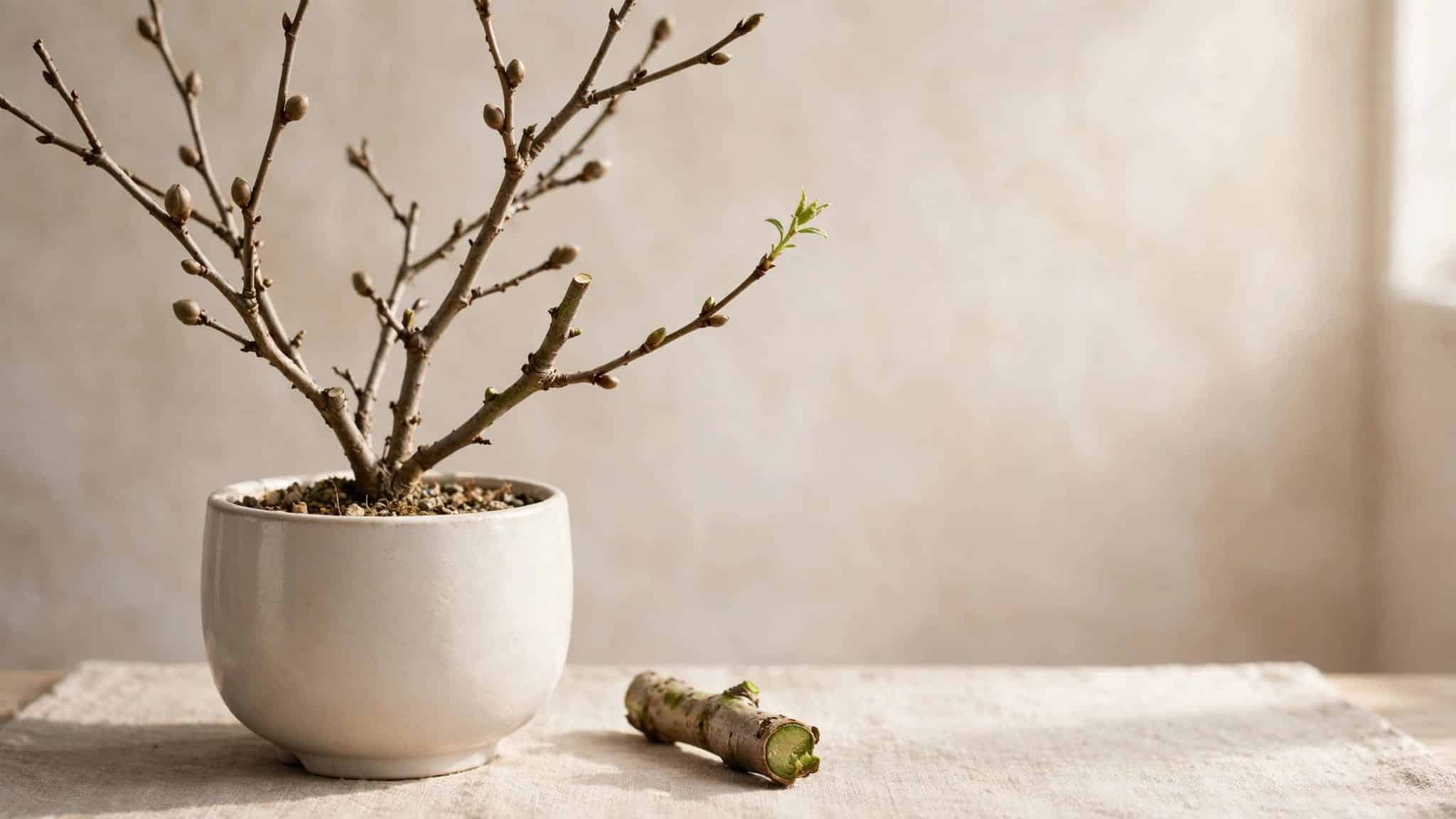
A plant can lose every leaf and still be alive. To tell whether a plant is dormant or dead, look for living tissue, consider its normal growth cycle, and combine several clues rather than trusting its appearance alone.
That distinction matters when your once-leafy companion resembles a collection of abandoned sticks. Before you give it a farewell speech or an emergency gallon of water, start with what dormancy actually means.
This post may contain affiliate links. If you make a purchase through these links, I may earn a small commission at no extra cost to you.
How a dormant plant differs from a dead one
Dormancy is a period of reduced growth in a living plant. Death means the tissues needed to sustain the plant have stopped functioning permanently.
The difficulty is that both can look surprisingly similar above ground.
Dormancy protects living tissues
Many temperate plants slow or suspend visible growth when conditions become unfavorable. Shorter days and changing temperatures help coordinate this seasonal response.
A deciduous shrub can shed its leaves while keeping living tissues inside its stems, buds, and roots. An herbaceous perennial may lose its aboveground growth while surviving below the soil.
Think of those visible stems as only part of the plant’s story. Their appearance doesn’t always describe the condition of the structures that support future growth.
Dormancy also doesn’t mean every biological process stops. Living tissues still need to maintain themselves, even when there’s little to admire above ground.
Slower houseplant growth needs a different explanation
Many tropical houseplants grow more slowly under reduced winter light without entering the same seasonal dormancy as a temperate tree.
A pothos that produces fewer leaves may simply have less energy available for growth. Sudden leaf loss, collapsing stems, or a persistent decline deserves a closer look.
This distinction prevents a common mistake: calling every unhappy winter houseplant dormant. Reduced growth can be normal, but damage, unsuitable conditions, and disease can occur at the same time.
Start with the plant’s history, buds, and branches
Before disturbing the roots or scratching a stem, consider what happened before the plant looked lifeless. Its recent history can make the physical clues much easier to interpret.
Put the change in context
Seasonal leaf loss in a deciduous plant is different from sudden collapse after freezing temperatures, prolonged dryness, or waterlogged soil.
Consider whether the change was gradual or abrupt. Notice whether the entire plant changed together or whether one section declined first. Those differences help separate a seasonal pattern from a possible injury or care problem.
Identification matters here. A bare maple in its leafless season and a bare evergreen don’t raise the same questions. Neither should be judged by the rules for the other.
You don’t need a perfect gardening diary. Even remembering that the pot stood in water after heavy rain can be useful.
Treat buds and twig flexibility as supporting clues
Look closely at existing buds and gently assess a small twig without forcing it. Avoid snapping branches simply to produce a clearer answer.
Food Forest Nursery’s three checks combine bud inspection, gentle twig flexing, and a small bark scratch. Its guidance also makes an important distinction: signs of life don’t guarantee recovery.
Bud appearance and flexibility vary between plants. Use these observations to build a picture, rather than letting one twig deliver the verdict.
Use the scratch test on woody stems
The scratch test helps assess woody trees and shrubs because living tissue may remain beneath an apparently lifeless surface. It isn’t a universal test for every plant.

Expose only a small patch
Choose an accessible small stem and gently remove a tiny patch of outer bark. LSU AgCenter’s scratch-test guidance describes using a fingernail or pocketknife to make this small inspection.
A fingernail avoids introducing a sharp blade when the bark is thin enough. The aim is to see beneath the surface, not strip a branch or make a deep wound.
Don’t peel bark around the stem’s circumference. That can damage the tissues responsible for moving materials through the plant.
Soft-stemmed plants, succulents, and plants without woody bark need other clues. Scraping them can cause unnecessary damage without producing a useful result.
Understand what the exposed tissue tells you
Green, moist-looking tissue beneath the bark is evidence that the tested area is alive. Stark Bros’ cambium test focuses on this living layer beneath the bark.
Dry, brown tissue raises concern about that section. However, one damaged tip doesn’t establish that the entire plant has died.
If necessary, inspect another small area closer to the base. Keep the disturbance minimal.
A green scratch shows living tissue at that spot. It doesn’t establish that the roots are healthy or that the plant will recover.
Look below the surface when the answer is unclear
For plants that survive underground, the visible stems may be the least informative part. Roots and the crown, where shoots and roots meet, can provide additional evidence.

Root condition matters more than color alone
If a potted plant’s condition remains uncertain, gently sliding out the intact root ball may reveal problems. Avoid pulling it out by its stems or repeatedly disturbing it.
Look at texture and smell as well as color. Roots vary naturally in appearance, so brown roots alone aren’t a reliable death certificate.
Plants Express’ dormancy guide identifies smelly, black, or slimy roots as warning signs of a dead or dying plant.
Those signs indicate deterioration, but they don’t establish how much of the plant remains alive. A damaged section and a completely failed root system are different situations.
Remember the crown and storage structures
Some perennials retain living crowns, bulbs, tubers, or other underground structures after their leaves disappear. Their continued survival depends on those structures, not on keeping every old stem alive.
Firm, intact tissue is more encouraging than tissue that has collapsed or become mushy. Even so, an underground inspection should answer a genuine question rather than become a routine disturbance.
Avoid digging up an established garden plant simply because its neighbors have begun growing. Different plants respond to seasonal conditions differently, and excavation can damage the very structures you’re hoping have survived.
Care for an uncertain plant without overwhelming it
Once you’ve found signs of life, the temptation is to help enthusiastically. Unfortunately, plants don’t interpret extra water and fertilizer as emotional support.
Your aim is to provide suitable conditions without adding another problem.
Match water and fertilizer to actual growth
Reduced growth often means reduced water use. Continuing a summer watering routine through a low-light period can leave potting mix wet for too long.
Assess the soil and the plant’s needs before watering. A dry surface doesn’t always mean the entire root ball is dry, especially in a large container.
Dormant plants may still need moisture, but that doesn’t justify keeping every species constantly wet. Equally, dormancy isn’t permission to let all roots dry completely.
Hold off on fertilizer while a plant is dormant or showing no active growth. Fertilizer supplies nutrients; it can’t restore dead tissue or repair a failed root system.
Improve the surroundings without chasing every symptom
For indoor plants, maintain suitable light and avoid cold drafts, hot radiators, and contact with cold window glass. Indoor heating can also lower humidity around tropical plants.
A humidifier can help where dry indoor air is a problem. Our guidance on winter care for indoor plants covers the broader relationship between light, temperature, moisture, and seasonal growth.
Inspect leaves and stems for pests as well. Winter doesn’t make indoor infestations impossible.
Make changes based on what you observe. Moving a struggling plant repeatedly between very different conditions can make its response harder to understand.
Key takeaways: weigh the evidence together
The strongest assessment combines the plant’s identity, recent conditions, visible changes, and the condition of its living tissues. No single test answers every part of the question.
A plant can also contain both living and dead sections. That makes “alive or dead” less straightforward than it first appears. A dead branch doesn’t establish whole-plant death, while a living stem doesn’t promise a healthy root system.
Separate survival from recovery. Evidence of living tissue gives you a reason to continue suitable care. It doesn’t tell you how well the plant will grow afterward.
Frequently asked questions
Can a plant be alive without any leaves?
Yes. Deciduous woody plants and many herbaceous perennials can survive a leafless period because living tissues remain elsewhere.
The important question is whether leaf loss fits that plant’s normal cycle. Unexpected leaf loss in a normally leafy houseplant needs a different assessment.
Does a brittle stem mean the whole plant is dead?
No. An individual stem can die while other sections remain alive. Flexibility also varies between plants, so a twig’s response shouldn’t stand alone.
Combine what you see with the plant’s history and other evidence. Avoid breaking additional stems in search of certainty.
Can extra fertilizer bring a dormant plant back?
Fertilizer doesn’t end dormancy on command. Growth depends on the plant’s biology and suitable conditions, including light, temperature, and moisture.
Adding fertilizer to a struggling plant without understanding the problem may create more stress. Living tissue needs appropriate care, rather than a stronger dose of everything.
Look for life before giving up
A lifeless appearance is a reason to investigate, not an automatic farewell. Start with the plant’s normal behavior, then use gentle observations to look for living tissue.
Keep the limits of each clue in mind. A scratch test answers a small question about one spot; the whole plant needs a broader reading.
That apparently abandoned collection of sticks may still have a growing season ahead of it. The useful skill is knowing what supports that possibility, without mistaking hope for evidence.


