
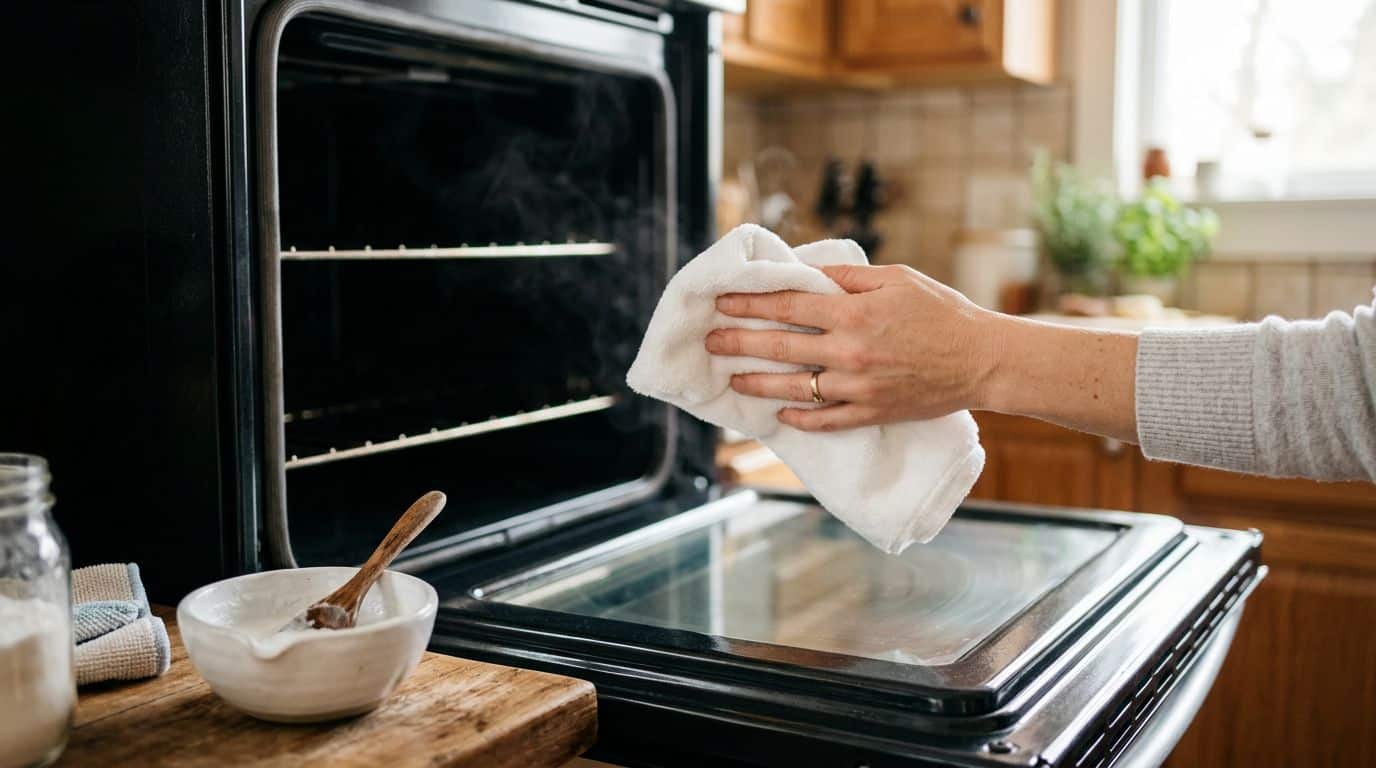
Cloudy oven glass makes a clean kitchen look tired. The good news is that you can clean oven glass without a razor blade, and without gambling on scratches. In most homes, a paste of baking soda and water, plus a soft cloth and a little patience, works well. No special tools required.
That matters because oven doors don’t just hold grime. They hold heat, trim, seals, and sometimes coated glass. Treat the mess like stuck mud on a windshield, soften it first, then lift it away. The glass gets clear, and your nerves stay calm. That keeps homeowners calm and renters out of trouble.
Why razor blades are risky on oven doors
A razor blade sounds fast. On a window, it sometimes is. On oven glass, it’s often a bad trade.
First, baked-on grit can sit under the blade edge. Then the blade drags that grit across the surface and leaves fine scratches. You may not see them right away. Later, they catch light and make the door look hazy, even after you clean it.
Also, many oven doors have more than plain glass. Some have tinted or treated surfaces. Others have trim and seals close to the viewing panel. A small slip can nick a gasket or scratch painted metal. That turns a cleaning job into a repair job.
There’s also the force problem. A blade invites pressure. Pressure feels productive, but it works against you here. Grease and carbon don’t usually need brute force. They need time, moisture, and a cleaner that loosens the bond.
Let the cleaner do the hard part. When you scrub less, the glass often looks better.
So, the safer plan is simple. Use a mild paste, a damp cloth, and a non-scratch pad. That mix removes most grime, and it won’t leave your oven door looking like a cat tested its claws on it.
The safest way to clean oven glass at home
Start with a cool oven. If you recently cooked, wait until the glass feels room temperature. Then place an old towel on the floor or along the open door edge, because drips happen.
Wipe away loose crumbs first. A damp microfiber cloth works well. After that, mix baking soda with a little water until it forms a thick paste, about the texture of yogurt. If the glass is greasy, add one small drop of dish soap and stir it in.

Spread the paste over the dirty glass with your fingers or a soft sponge. Keep it on the glass, not packed into the door trim. Then let it sit for 15 to 20 minutes. That pause matters. It softens the brown film so you don’t have to fight it.
Next, dampen a clean cloth with hot water and wring it out well. Lay the cloth over the paste for five minutes. The heat and moisture wake the paste back up. Then wipe in small circles with a microfiber cloth or a non-scratch sponge. Work from the edges toward the center, and rinse your cloth often.
Use a damp cloth, not a dripping one. Too much water can run into the door frame and leave streaks between the panes.
If residue hangs on, spray a little white vinegar over the area. The fizz helps lift leftover paste and loosen the last sticky bits. Wipe again with a clean damp cloth, then dry the glass with a fresh towel.
Most doors come clean after one round. If a few dark spots remain, repeat the process instead of pressing harder. When you clean oven glass this way, patience beats muscle every time.
When stains won’t budge, change the method, not the pressure
Some oven doors collect more than a light film. If yours has thick grease, wash the glass first with warm water and a few drops of dish soap. Dry it, then apply the baking soda paste. Soap cuts the oily layer, so the paste can reach the baked-on stain below.
For dark, crusty spots, give the paste more time. Thirty minutes is fine on cool glass. Still, keep the paste damp. If it dries hard, mist it lightly with water or vinegar before wiping. A dry paste can feel gritty, which defeats the point.
If the grime is between the panes
This is the one mess that frustrates almost everyone. You wipe the outside, then realize the haze sits inside the door. At that point, don’t pry with a blade or force tools into the vent slots.
Some ovens let you remove the outer panel or reach between the panes, but only if the manual says it’s safe. Follow that guide closely, because the door is heavier and more awkward than it looks. If you can’t find clear steps for your model, call an appliance tech. That costs less than broken glass.
How to keep the glass clearer for longer
A quick wipe after a big roast saves real work later. Wait until the oven is warm, not hot, then remove fresh splatter with a damp cloth. Also, use a sheet pan under bubbling dishes when you can. Less smoke and splash means less grime on the door.
If you use the self-clean cycle, wait until the door cools all the way before touching the glass. Heat can bake residue firmer for a while, so rushing the job often spreads it instead.
A short monthly clean keeps the job small. That’s the secret, really. Oven glass is hardest when it becomes a history book of every casserole you’ve ever loved.
Clear oven glass isn’t about sharp tools. It’s about softening the mess, lifting it gently, and repeating once if needed. If you clean oven glass with baking soda, a soft cloth, and a light touch, you’ll get a clear view without fresh damage. The next time the door turns cloudy, treat it like a slow stain, not a battle, and it will come off like one.


