
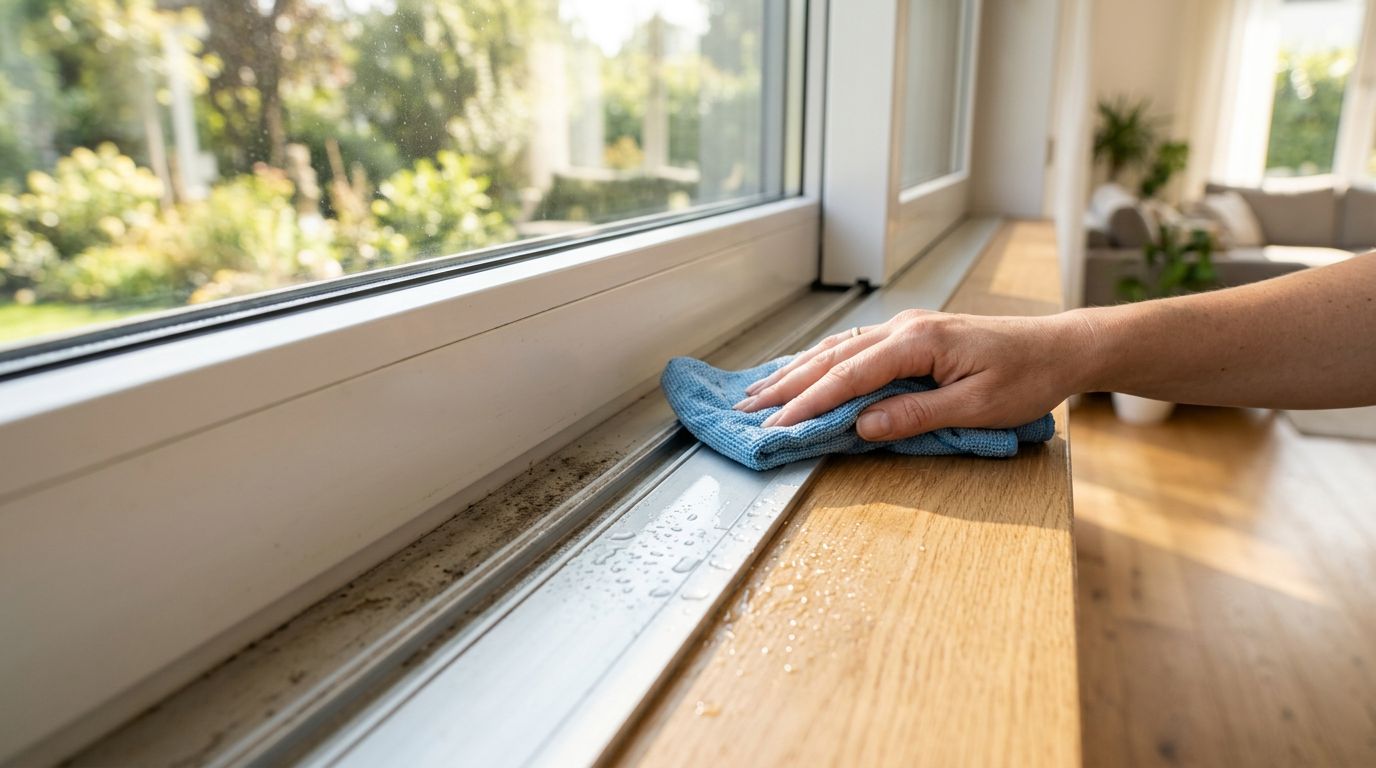
Window tracks have a strange talent for catching every crumb of dust, pollen, and grit in the room. Then, when you finally notice them, they look like a job built for tiny tools and bad moods.
The good news is that you can clean window tracks without scrubbing like you’re polishing grout. A calmer method works better, makes less mess, and saves your wrist for tasks that deserve the effort.
Why window tracks get filthy so fast
Window tracks are like narrow gutters inside your home. Dust settles there, bugs wander in, and damp air turns loose dirt into a gray paste. If the window sits open often, the mess builds even faster.
That buildup is why the toothbrush method feels so annoying. A toothbrush is small, but it often pushes grime from one corner to the next. It also flicks dirty droplets onto the sill, the wall, or your shirt, which is rude behavior from such a tiny object.

A better plan starts with the simple truth that dry dirt should leave before water arrives. If you wet the track too soon, the dust turns into sludge. Then the whole job feels like stirring cake batter in a crack.
So, before you clean, gather a few easy tools. A vacuum with a crevice attachment does most of the heavy lifting. After that, a microfiber cloth, a spray bottle, and a dull butter knife or plastic card wrapped in cloth can reach the grooves without a wrestling match. For most vinyl or painted tracks, warm water with a drop of dish soap is enough. If the grime is sticky, a light mix of water and white vinegar can help.
If your window trim is wood, use less liquid. Wood and puddles aren’t close friends.
Remove the loose dust first. Add liquid too soon, and the track turns into mud.
Once you stop treating the track like a scrub-only problem, the whole job gets easier.
How to clean window tracks with less mess and less scrubbing
Start with the vacuum. Move the crevice tool slowly along each groove, then pause in the corners where debris likes to camp out. A quick pass won’t grab much, because the dirt often hides in little ridges.

After the dry pass, mist the track lightly with your cleaning mix. Lightly matters here. You want the surface damp, not flooded. Let it sit for two or three minutes so the stuck-on grime can loosen.
Next, wrap a microfiber cloth around a dull butter knife, a plastic putty knife, or even an old gift card. Then slide that edge through the grooves. This works far better than a toothbrush because the cloth fills the narrow space and lifts dirt out instead of brushing over it. Turn the cloth as it gets dirty, and keep moving with steady pressure.
Corners usually hold the last stubborn bits. At that point, the pointed corner of the cloth or a cotton swab can finish the job without turning it into hand-to-hand combat. If a patch still won’t budge, add another light mist and wait a minute before wiping again.
The trick is patience, not force. Most people attack the track too hard because it looks worse than it is. In reality, once the loose grit is gone, the rest often slides out in soft gray streaks.
This method also helps when you clean window tracks in rental spaces. It keeps splatter low, avoids harsh products, and doesn’t ask you to grind abrasive bristles against painted or vinyl surfaces. If the window still sticks after cleaning, the problem may be the hardware, not the dirt.
Dry the track well and keep future buildup under control
A clean track can get dirty again fast if you leave moisture behind. So, after wiping away the grime, go back with a dry section of cloth and soak up any damp spots. Open the window for a few minutes if the weather allows. That small step helps stop fresh dust from clinging to a wet surface.

It also helps to skip oily sprays unless your window maker says they’re safe. Oil can make the track look slick for a day, then act like a magnet for new dust. Clean and dry usually beats shiny and sticky.
For upkeep, think small and boring. That’s the secret. When you dust the room, run the vacuum along the tracks. After a storm, heavy pollen day, or open-window weekend, give them a quick wipe before the grime settles in for a long stay. If your screens are dusty, clean those too, because they often drop dirt right back into the track you finished.
The best method to clean window tracks isn’t fancy. It’s dry debris out, loosen what’s left, then wipe with a cloth that fits the groove. No tiny scrub battle required.
That old toothbrush can go back to whatever odd cleaning job it was born for. The next time your window tracks look grimy, grab a vacuum and a cloth first.
A few calm minutes now beat twenty minutes of angry scrubbing later. That’s a trade worth taking.


