
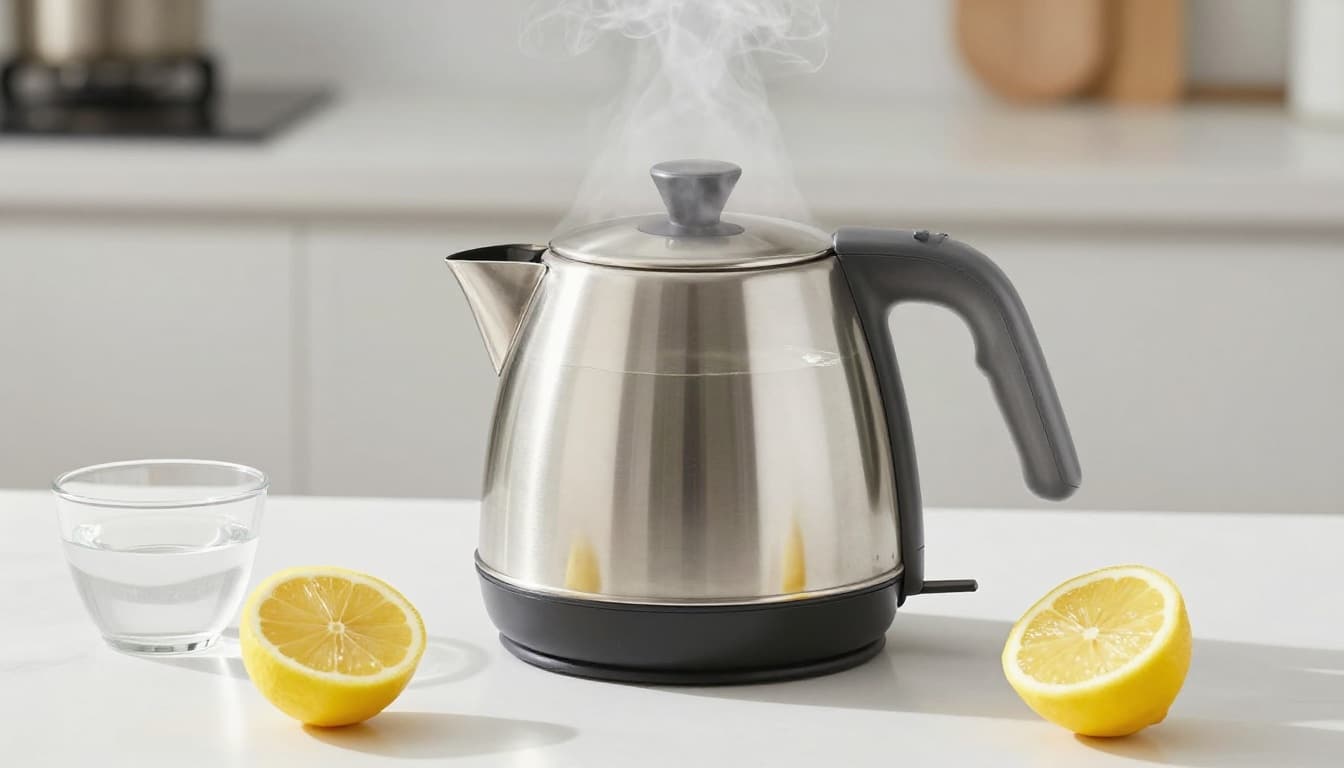
A kettle can look clean and still make your tea taste like a science project. That odd flavor usually comes from leftover descaler, too much vinegar, or scale that never fully came off.
The good news is simple. If you descale electric kettle buildup with a mild acid, then rinse it the right way, the kettle should taste like nothing at all. That blank, boring taste is the goal, because your coffee and tea should do the talking.
Why your kettle tastes strange after descaling
Limescale is mostly mineral buildup from hard water. It sticks to the base and walls of the kettle, then slowly changes how the kettle heats. Over time, it can make water taste flat, chalky, or faintly metallic.
The trouble starts when you clean it too aggressively. A strong vinegar mix, a commercial cleaner left too long, or a rushed rinse can leave behind a sharp aftertaste. That “chemical taste” often isn’t a mystery chemical at all. It’s usually residue, trapped smell, or loosened scale still sitting inside.

If you open the lid and see white crust, cloudy patches, or rough flakes, your kettle is asking for help. It doesn’t need punishment. It needs a gentle clean and a patient rinse.
The aim isn’t to make the kettle smell clean. The aim is to make it taste like nothing.
That difference matters. A kettle is not a sink drain. Mild acid, warm time, and fresh water do most of the work.
How to descale electric kettle with vinegar, without the aftertaste
White vinegar works well because it dissolves mineral scale without scrubbing the life out of the inside. Still, the trick is to keep the mix mild. For most kettles, fill it halfway with equal parts water and white vinegar. If the buildup is light, use more water than vinegar.
Before you start, unplug the kettle and let it cool. Also, check the manual if your model has any warning about acidic cleaners. Then pour in the solution, switch the kettle on, and let it come to a boil. Once it clicks off, don’t dump it right away. Let the warm liquid sit for 15 to 20 minutes so the scale can loosen.

After that, pour the mixture out and look inside. If you still see patches, wipe them gently with a soft sponge or cloth. Don’t go at it like you’re sanding a deck chair. Most scale comes away easily after a soak, and a rough scrub can damage some interiors.
Now comes the part people rush, and it’s the reason bad taste lingers. Rinse the kettle several times with fresh water. Then fill it with clean water, boil it, and throw that water away. Repeat that boiling rinse at least twice. If you can still smell vinegar when the steam rises, do one more round.
This is where patience pays off. Vinegar smell clings, especially in plastic parts near the lid. A final rinse with the lid open, followed by a few minutes of air-drying, helps that smell fade. Once the kettle smells neutral, boil one more batch of plain water and taste a spoonful after it cools. If it tastes like plain hot water, you’re done.
If you hate vinegar, lemon is a gentler option
Some people can’t stand the smell of vinegar, and fair enough. Lemon juice is softer on the nose and still acidic enough to tackle light to moderate scale. It may need a second round on a badly coated kettle, but it often leaves less lingering taste.
Use the juice of one lemon, or a few tablespoons of bottled lemon juice, with enough water to cover the scale. Boil the mixture, let it sit for 20 minutes, then pour it out. The inside should look brighter, and the smell is usually easier to live with.

Lemon has one small downside. It can leave a fresh citrus note if you don’t rinse well, which sounds charming until your black coffee tastes like a fruit salad. So the same rule applies here. Rinse, boil plain water, dump it, and repeat until the scent is gone.
If the kettle still tastes off after either method, the problem may be old loosened scale trapped near the spout or lid. Rinse those spots carefully, and wipe what you can reach with a soft cloth. Never dunk the electrical base in water.
The rinse is what removes the “chemical” taste
A clean kettle should look plain and smell plain. That’s the whole point. After descaling, fill it with fresh water, boil it, discard the water, and do it again until the smell disappears. For stubborn cases, leave plain warm water in the kettle for 10 minutes between boils.

It also helps to leave the lid open after the final rinse. That short airing-out time lets trapped smell escape. Then, when you make your next drink, use a fresh batch of water rather than the test boil.
Going forward, descale before the buildup turns into a white cave wall. If your water is hard, once a month may be right. If it’s softer, every couple of months might do. Emptying the kettle after use also slows scale, because less standing water means fewer minerals left behind.
A clean kettle should taste like nothing
The best way to descale an electric kettle without a chemical taste is almost boring. Use a mild vinegar or lemon mix, let it sit, then rinse more than you think you need to.
That extra rinse is the difference between fresh tea and a mug that tastes like regret. Give your kettle ten calm minutes today, and tomorrow’s first cup will thank you.


