
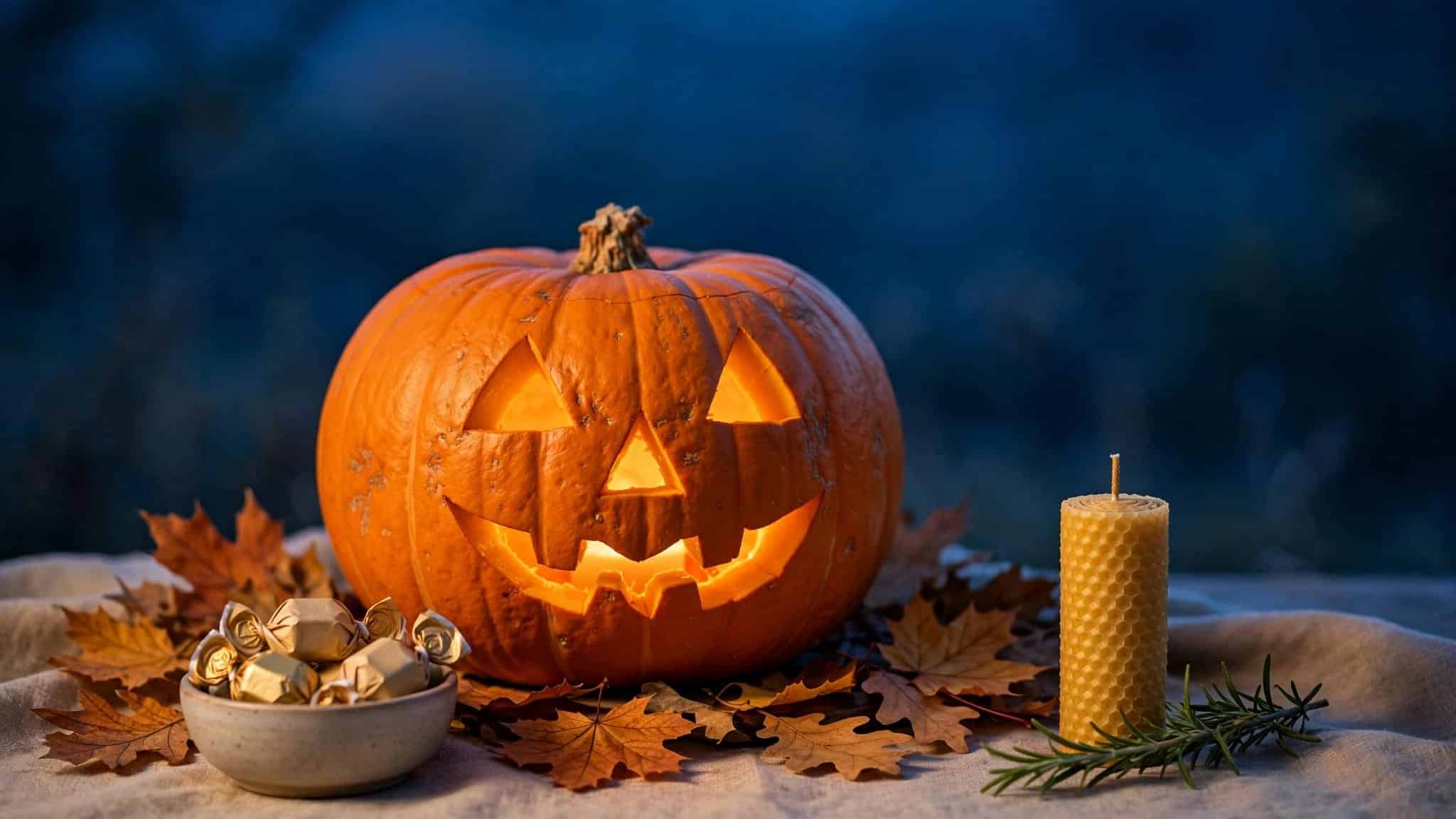
The holiday is observed on October 31, the evening before All Saints’ Day, and falls on a Saturday in 2026. Its history brings together Christian remembrance, Celtic seasonal traditions, and community customs that now include costumes, carved pumpkins, and trick-or-treating.
You can enjoy the celebration without knowing every detail, but its unusual mixture makes more sense once you understand where those customs came from. Start with the date and name, then consider how prayers for the dead eventually shared an evening with buckets of sweets.
This post may contain affiliate links. If you make a purchase through these links, I may earn a small commission at no extra cost to you.
Key Takeaways
Halloween has religious roots and a strong connection to Samhain, although their exact historical relationship remains debated. Modern celebrations also owe much to Irish and Scottish immigrants and changing American community life.
You don’t need to choose between solemn remembrance and seasonal fun. Different households observe the evening differently, and a comfortable celebration leaves room for those preferences.
When Is Halloween, and What Does Its Name Mean?
The date in 2026
Halloween falls on Saturday, October 31, 2026. October 30 is associated with separate regional customs, including Mischief Night, but it isn’t Halloween itself.
As timeanddate’s U.S. holiday guide explains, Halloween isn’t a public holiday. Most businesses follow their usual schedules, so the occasion doesn’t automatically mean a day off.
The weekday changes because the calendar year isn’t exactly divisible into weeks. October 31 falls on Sunday in 2027 and Tuesday in 2028, after the leap day advances it an extra day.
All Hallows’ Eve and Allhallowtide
Halloween is also called All Hallows’ Eve, All Saints’ Eve, Hallowe’en, and Allhalloween. Its familiar name comes through Lowland Scots as a contraction of All Hallows’ Eve; “even” means evening.
“Hallow” refers to a saint or holy person. October 31 begins Allhallowtide, followed by All Saints’ Day, also called All Hallows’ Day, on November 1, and All Souls’ Day on November 2. These Christian observances honor saints and remember the dead.
How Christian Observance and Samhain Fit Together
The Christian calendar
On May 13, 609, Pope Boniface IV dedicated Rome’s Pantheon to Christian martyrs. This was an important development in the collective commemoration of saints, although the date wasn’t yet the familiar November observance.
November 1 became established over time. The Frankish Empire officially adopted that date for All Saints’ Day in 835.
Halloween’s place immediately before the feast explains its Christian name and calendar position. Some Christians still observe the evening through vigils, church services, and remembrance. For them, the religious meaning remains part of the occasion rather than a historical footnote.
Samhain’s seasonal customs
Samhain was a Celtic festival associated with the end of harvest and the approach of winter. Its observance varied among Celtic communities. In accounts of its October 31 observance, the boundary between the living and the dead became unusually thin.
Traditional descriptions include Druid bonfires, fortune-telling, and disguises made with animal heads and skins. People relit household hearths using flames from the communal fire, seeking protection through winter.

The connection with Halloween is widely cited, but a direct, uninterrupted line isn’t settled history. The Christian vigil may also have developed independently. Britannica’s account of Halloween’s origins describes a combination of Samhain and Christian observances.
It helps to distinguish the name’s clear Christian meaning from the more complicated history of individual customs.
Why Costumes, Soul Cakes, and Pumpkins Matter
Disguises and door-to-door visits
Historical explanations connect disguises with beliefs about wandering spirits. Someone wearing a mask might hope to escape recognition by an unwelcome visitor from the other world. Today’s costumes give that anxiety a considerably friendlier wardrobe.
Another influence was souling. On All Souls’ Day, poor people, often children, visited homes and received soul cakes in exchange for prayers for the household’s dead.
Souling is one suggested ancestor of trick-or-treating. Guising, which involved visiting homes in disguise and sometimes performing for a reward, also belongs to this history. Modern trick-or-treating grew through several customs rather than one recorded invention.
Jack-o’-lanterns and fortune-telling
Carved lanterns were once made using turnips and other root vegetables in Ireland and Scotland. In North America, pumpkins became a familiar choice for making a jack-o’-lantern. Their size makes room for a face, though artistic ambition can still exceed carving ability.
Halloween gatherings also included games about the future, particularly marriage. Apple bobbing and other divination customs gave young people a playful way to discuss romance.
These activities help explain why the holiday has never been entirely about frightening people. Courtship, food, games, and neighborhood visiting have long shared space with ghosts.
How Halloween Became an American Celebration
Irish and Scottish immigrants brought Halloween customs to North America during the nineteenth century. The arrival of many Irish people fleeing the Irish Potato Famine helped spread those traditions more widely.
As celebrations grew, communities developed organized alternatives to destructive pranks. On October 31, 1933, incidents remembered as “Black Halloween” included overturned cars and smashed windows in Depression-era towns. Some cities considered canceling festivities.
October 30 mischief later became especially damaging in Detroit, where Devil’s Night arson was a serious problem during the 1980s. Detroit and other cities experienced fires, while citizen patrols helped reduce the destruction by the 1990s. Regional names include Mischief Night and Beggar’s Night, although their meanings and local dates vary.
Community traditions also gave trick-or-treating a more welcoming, organized side. Trick-or-Treat for UNICEF began in 1950. Rutland, Vermont, established its parade in 1960, and New York’s Greenwich Village Halloween Parade began in 1974.
The commercial scale is substantial. History.com’s history of Halloween reports annual American spending above $11 billion and describes it as the second-largest commercial holiday after Christmas. It also estimates that roughly one-quarter of annual U.S. candy sales are associated with Halloween.
Those figures describe a shopping occasion, but spending doesn’t determine whether your evening feels festive.
Planning a Celebration Your Guests Can Enjoy
Make the atmosphere comfortable
Start by considering who will attend and how much fright they enjoy. A friend who likes elaborate costumes may still dislike sudden noises or graphic decorations. You might ask, “Would you prefer funny ghosts or something properly spooky?”
For relaxed Halloween parties, coordinate music, food, and a simple photo corner. Vintage sunglasses, hats, and a seasonal backdrop give guests something playful to do without requiring expensive costumes. Sliders and other easy-to-serve foods also leave you free to spend time with people.
A gentle ghost story night can suit guests who enjoy atmosphere but prefer fewer surprises. Keep Halloween costumes optional, and let people sit out activities without explanation.

Keep safety practical
For trick-or-treating, choose costumes that allow clear vision and easy walking. Reflective details and a flashlight help children remain visible. Younger children need adult supervision, particularly near roads and driveways.
Candy fears deserve perspective. In 1974, Ronald O’Bryan killed his son with potassium-cyanide-laced candy in Deer Park, Texas. That real crime involved a parent, rather than proving the widespread rumors about strangers poisoning Halloween sweets.
Review collected Halloween candy before children eat it, discard opened packages, and take food allergies seriously. Battery-operated lights also avoid placing an exposed flame inside a pumpkin near loose costumes.
How Halloween Movies Made Michael Myers Familiar
Seasonal horror movies suit an evening already associated with darkness, ghosts, and disguises. John Carpenter’s Halloween, released in 1978, gave the holiday an especially lasting screen presence through Michael Myers.
The original film had a budget of about $300,000 and was filmed largely in South Pasadena, California. Its unsettling mask began as a $1.98 William Shatner mask that was altered for the production. The film’s official behind-the-scenes account describes its modest production circumstances.
The Halloween franchise has thirteen released films and has grossed more than $884 million worldwide. Its success helped strengthen the association between Halloween viewing and slasher films, though seasonal horror includes many other kinds of stories.
If you’re choosing a group film, agree on the level of violence beforehand. “Scary” can mean a playful ghost story to one guest and something considerably less restful to another.
Frequently Asked Questions
What is Halloween celebrated for?
For many people, Halloween is a seasonal celebration centered on costumes, treats, parties, and community activities. For others, its connection with remembrance and the Christian calendar remains important.
The meaning depends partly on the household. You can acknowledge that history without giving every activity a religious purpose.
Does Halloween have to be frightening?
Halloween can be as gentle as pumpkin decorating, an afternoon costume gathering, or sharing seasonal food. Intense scares are optional.
If you’re celebrating with children or easily startled friends, explain what activities involve before they begin. Predictability often makes the evening more enjoyable, especially when everyone else appears to be wearing a mask.
Give Halloween a Meaning That Fits Your Household
Its familiar customs have several histories, and no single origin story explains them all. Christian remembrance, Samhain traditions, immigration, and community celebrations each contributed something different.
You can respect those roots while choosing an evening that suits your guests. Keep the date clear, the activities comfortable, and safety practical. A carved pumpkin and good company are enough to begin.


