
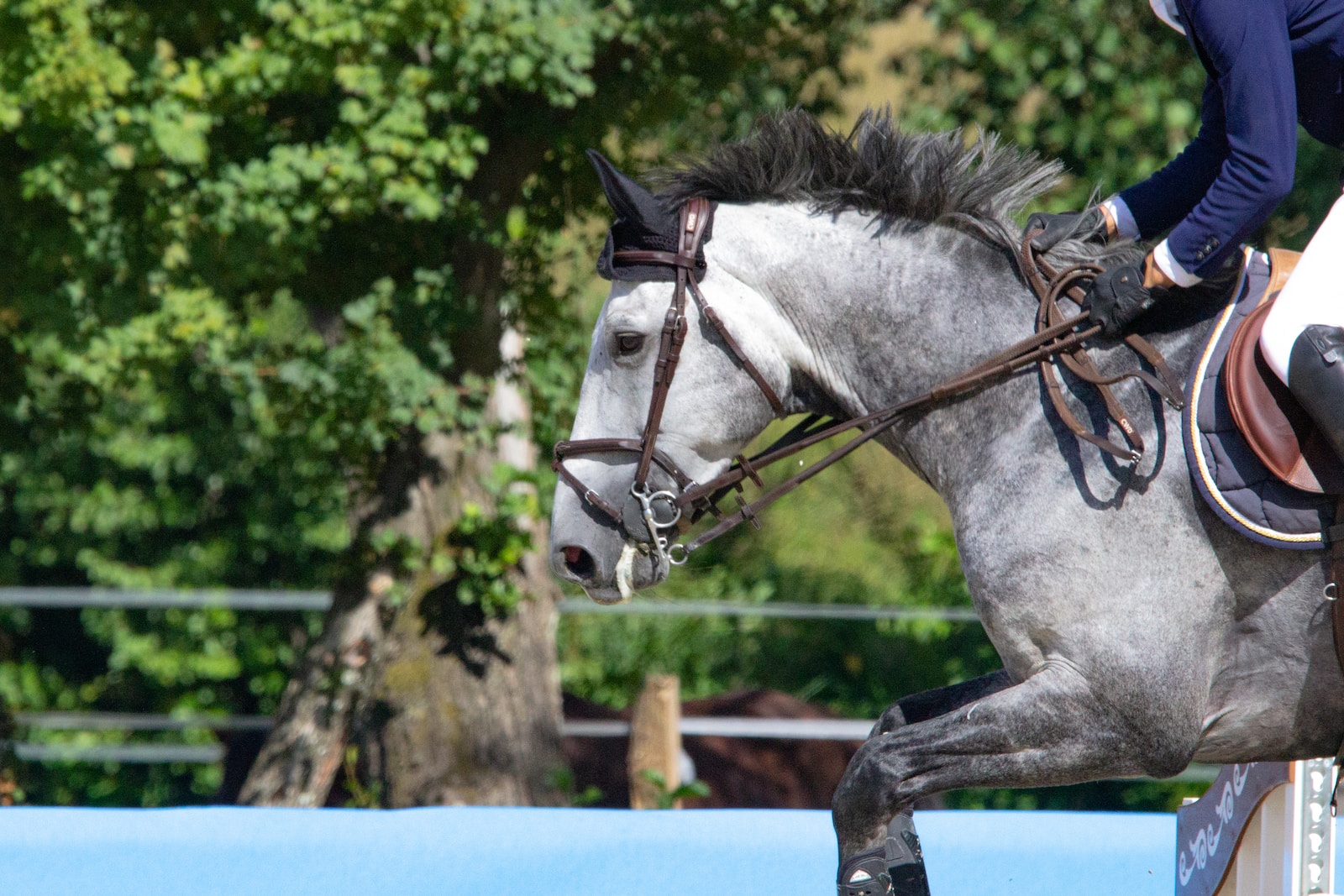
Hurdle racing is a popular form of horse racing that involves horses jumping over a series of hurdles on a track. It requires a special set of skills and training for both the horse and rider. Training a horse to jump hurdles can be a long and challenging process, but with proper training and patience, horses can become successful hurdle racers. In this article, we will discuss how one can train a horse to jump hurdles in horse racing.
Train a horse to jump hurdles in horse racing
Understanding the Basics
Before training a horse to jump hurdles, it is important to understand the basics of hurdle racing. In hurdle racing, horses must jump over a series of evenly spaced hurdles that are typically 3 1/2 to 4 1/2 feet tall. The hurdles are spaced apart to ensure that horses have enough time to get into the correct jumping position before clearing the next hurdle. Hurdles can be made of various materials, including plastic, wood, or a combination of both.
Developing a Training Plan
The first step in training a horse to jump hurdles is to develop a training plan. The plan should take into account the horse’s age, breed, and overall health. It should also consider the horse’s current level of training and experience. It is important to start slowly and gradually increase the difficulty of the training over time. This will help prevent injuries and ensure that the horse is properly prepared for hurdle racing.
Building Core Strength
One of the most important aspects of training a horse to jump hurdles is building the horse’s core strength. This involves developing the horse’s abdominal and back muscles, which are essential for jumping. Exercises such as lunging and long trotting can help build core strength. Hill work can also be beneficial, as it can help develop the horse’s hindquarters, which are essential for jumping.
Introducing Hurdles
Once the horse has developed a good level of core strength, it is time to introduce hurdles. Start by placing a single hurdle in a safe and controlled environment, such as a round pen or arena. Allow the horse to approach the hurdle at a walk and then stop. Gradually increase the speed and intensity of the approach, eventually asking the horse to jump the hurdle.
It is important to make sure that the horse is jumping the hurdle correctly. The horse should be jumping with its front legs first, followed by its hind legs. The horse’s back should be rounded and its head and neck should be in a natural position. If the horse is jumping incorrectly, it may be necessary to go back to the basics and work on core strength exercises.
Increasing the Difficulty
Once the horse is comfortable jumping a single hurdle, it is time to increase the difficulty. Start by adding additional hurdles, spaced at the appropriate distance. Gradually increase the height of the hurdles over time. It is important to ensure that the horse is comfortable with each height before increasing it further.
Incorporating Course Work
Once the horse is comfortable jumping a series of hurdles, it is time to incorporate course work. This involves jumping a series of hurdles in a specific pattern or layout. The course should be designed to challenge the horse, but not overwhelm it. It is important to practice course work regularly to ensure that the horse is comfortable with different layouts.
Working with a Trainer
Training a horse to jump hurdles can be a complex and challenging process. It is important to work with a trainer who has experience in hurdle racing. A trainer can provide valuable guidance and support throughout the training process. They can also help identify areas where the horse needs improvement and develop a customized training plan to address these areas.
Conclusion
In conclusion, training a horse to jump hurdles requires a lot of patience, dedication, and attention to detail. It is important to gradually build up the horse’s fitness and strength, as well as their confidence and trust in their rider. Jumping exercises should be introduced gradually, with an emphasis on correct technique and careful schooling. Consistency and repetition are key, and it is important to give the horse plenty of time to rest and recover between training sessions. Ultimately, success in jumping competitions relies on a combination of the horse’s natural ability and the rider’s skill and experience, as well as a strong partnership built on trust and communication.


