
Starting to exercise can feel like trying to fold a fitted sheet. You’ve watched other people establish an exercise routine, you know it’s possible, and yet it still ends up as a messy ball in your arms.
The good news is that your routine doesn’t need to be perfect. It needs to be repeatable. If you’re busy, tired, or returning after a long break, the best plan is the one you’ll still do next week.
What follows is a simple way to choose the right starting point, build a week that fits real life, and keep it going without getting hurt or burned out, all for better health and wellbeing.
Start with safety and a goal that fits your real life
Most people quit because they start like they’re training for a movie montage. The body hears that plan and replies with sore knees, stiff shoulders, and a strong desire to lie down forever.
Set fitness goals that survive a bad day
A goal like “get fit” is too foggy. It doesn’t help when work runs late. Instead, choose a goal that has a scene attached to it.
Maybe it’s carrying groceries without stopping. Maybe it’s keeping up on stairs. Maybe it’s mood, sleep, or stress. Those are valid, and they’re often the first wins you’ll notice.
Write your goal in plain language, then make it smaller. “Work out 5 days a week” becomes “move for 20 minutes, three times a week.” Smaller goals feel almost rude in their simplicity, which is a sign you’re doing it right.
Warm-ups, pain signals, and when to ask a pro
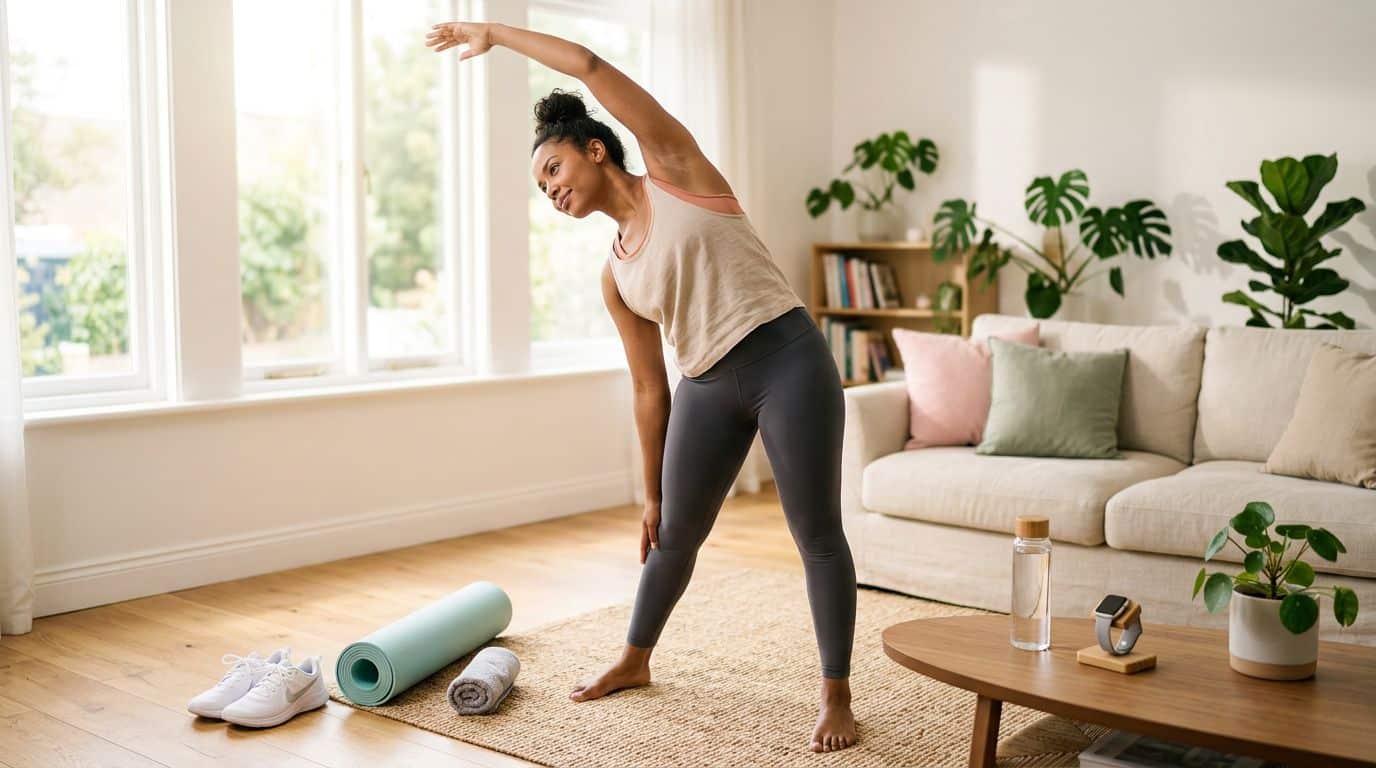
Warm-ups are not optional to exercise safely, even if your workout is short. A brisk 3 to 5 minutes of easy movement (marching in place, gentle squats, arm circles) tells your joints what’s coming.
Also, to gauge exercise level, learn the difference between “working” and “warning”:
- Working discomfort feels like effort, heat, and breathing harder, then it fades after.
- Warning pain feels sharp, sudden, or lingers and gets worse later.
If you have chest pain, dizziness, fainting, or a medical condition that affects exercise safety, check in with a clinician. Consulting a pro is vital for older adults, those with chronic conditions, people active during pregnancy, or those staying active with a disability. The CDC physical activity basics are also a solid reference point for physical activity guidelines.
If your plan requires perfect energy and perfect time, it’s not a plan, it’s a wish.
Build a simple weekly exercise routine (home or gym)
A good week has a steady rhythm of physical activity. It doesn’t need variety for variety’s sake. Think of it like brushing your teeth. You don’t need a new toothbrush theme each day.
The three pillars that cover almost everything
You can keep your routine balanced without turning it into a spreadsheet. Most beginners do best when they rotate these pillars:
- Strength: Builds muscle, protects joints, makes daily life easier, and supports weight management.
- Cardio: Helps heart health, stamina, and stress.
- Mobility: Keeps movement smoother and reduces those “why does my hip do that?” moments. Try yoga for health as a simple option.
The simplest pattern is three strength-focused days, with short cardio and mobility sprinkled in.

A weekly template you can repeat
Here’s a structure that works at home or in the gym:
- Day 1: Full-body strength (20 to 35 minutes)
- Day 2: Moderate physical activity (10 to 30 minutes, or vigorous intensity exercise if you prefer) plus light stretching
- Day 3: Full-body strength
- Day 4: Rest or a walk
- Day 5: Full-body strength
- Weekend: One optional fun session (hike, bike, mall walking program, class) or full rest
To keep it practical, match your workout length to your schedule. This table shows three “realistic” time brackets and what to do with them.
| If you have… | Do this | What it looks like |
|---|---|---|
| 10 minutes | Mini circuit | 2 rounds of squats, push-ups (or wall push-ups), and a brisk walk in place |
| 20 minutes | Full-body basics | Squat pattern, hinge pattern, push, pull, and core |
| 30 minutes | Full session | Full-body basics plus a short finisher (bike, rower, incline walk) |
The takeaway is simple: consistency in physical activity beats duration. When time is tight, shorter still counts.
If you want a short, no-equipment option for exercising on a budget to keep in your back pocket, the 10-minute home workout plan is a useful example of indoor physical activities like fitness videos that show what “small but done” can look like.
What to do in a strength session (without overthinking it)
Choose 4 to 6 exercise examples for exercise for beginners and keep them the same for a few weeks. For home workouts, that can be squats, glute bridges, rows with a band, incline push-ups, and a plank. In a gym, you might use goblet squats, machine rows, dumbbell presses, and Romanian deadlifts.

Photo by Andrea Piacquadio
Keep your effort at a “could do 2 more reps” level most days. That’s hard enough to improve, but not so hard that you fear the next session.
For a longer runway with built-in progression, the beginner workout plan over 8 weeks lays out how to add volume without doing anything dramatic.
Keep going: recovery, tracking, and the moment motivation disappears
Motivation is nice, like a sunny day. Still, you can’t schedule it. Your routine has to work when motivation calls in sick, helping you stay active and reap the health benefits.
Recovery is part of training, not a reward
Soreness doesn’t mean you did it “right.” It often means you did too much too soon. Sleep, protein, and hydration matter because they turn workouts into results and deliver real health benefits, especially for older adults focused on healthy aging.
On strength days, give the same muscles about 48 hours before you hit them hard again. If you feel run down, swap the session for a walk and a few mobility drills. That choice keeps you staying active and the habit alive.
Track less, notice more
You don’t need a fancy system. Simple exercise logs in your phone notes work. Write down the date, the moves, and one small detail: weight used, reps completed, or how it felt.

Progress can be quiet. Use progress tests like noticing a set feels steadier. Your breathing calms faster. Your back hurts less after sitting all day. Those are real gains.
When you’re ready to level up, change only one variable at a time. Add 2 reps per set, or add 5 pounds, or add one extra set. Don’t change everything at once, because then you can’t tell what helped.
If you like guided sessions, a clear example of a structured workout is this 30-minute full-body workout at home. Even if you don’t follow it exactly, it can help you see how a session flows.
Common obstacles, handled without drama
Life will interrupt. That’s not failure, it’s Tuesday.
When you miss a week, don’t “make up” workouts like you’re paying a debt. Just return to the next planned day. If your schedule keeps breaking, shrink the routine until it fits, then grow it again later to stay consistent.
The goal isn’t to win one perfect week. The goal is to keep returning.
Conclusion
A solid exercise routine is built on small choices in physical activity you can repeat, even when your day goes sideways. Start with safety, pick a weekly rhythm, and keep the sessions simple long enough to feel confident. After that, recovery and tracking keep you honest without making you obsessive. Choose your next workout time now and commit to exercise safely, then show up for the version of you who will be grateful later.


