
A holiday can leave you more tired than the week you escaped. There are airport alarms, packed itineraries, restaurant bookings, traffic apps, and the strange pressure to prove you made every minute count.
Slow travel benefits appear when a trip stops feeling like a performance. You stay longer, move less, and leave enough empty space for your mind to catch up with your body.
The aim is to move away from performative tourism to effectively reduce stress. By slowing down, you can return home feeling truly refreshed rather than needing another weekend to recover.
Key Takeaways
- Slow travel lowers the sense of urgency that keeps stressed travelers on edge, even while they are away.
- Staying in one place gives your brain fewer decisions to make each day, which can ease the mental strain of travel fatigue.
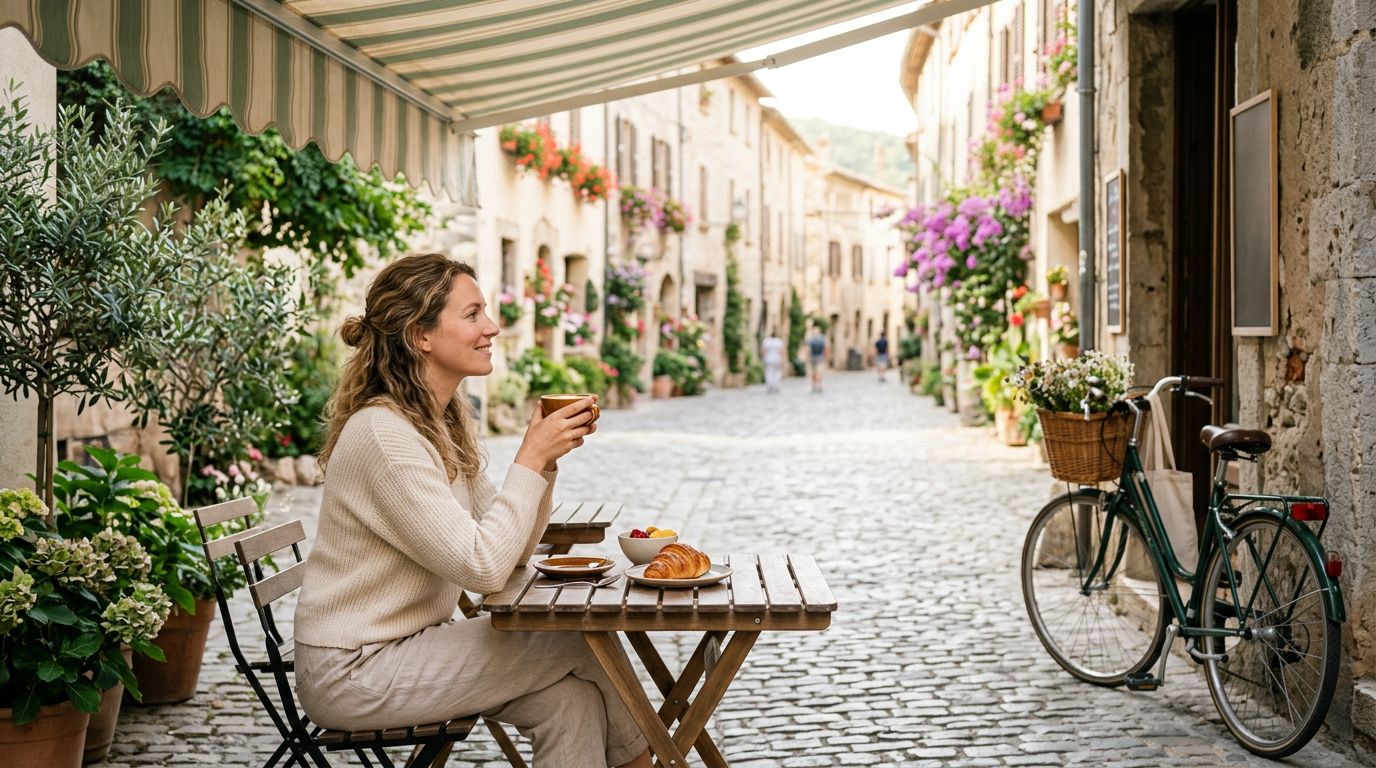
- Simple routines, such as buying breakfast at the same cafe, can make an unfamiliar place feel safe and grounding.
- A slower itinerary leaves room for sleep, wandering, real conversations, and pleasant surprises that do not fit a schedule.
- You do not need a month off work to travel slowly. A three-night trip with one base is often enough to encourage mindfulness and intentionality, even on a short break.
A Holiday Isn’t Rest If You Spend It Racing
Many people plan trips as if they are collecting proof. Three cities in five days. Every famous museum. The restaurant somebody saved on TikTok six months ago. A photo at sunrise, followed by a train at 8:12.
There is nothing wrong with wanting to see a place. The trouble begins when your time away copies the pace of the life you wanted to leave behind.
A packed itinerary keeps the brain in task mode. You are checking times, finding platforms, judging whether lunch took too long, and wondering if the next stop is worth it. This constant motion often leads to travel fatigue and travel burnout. Instead of a vacation, you are simply doing project management with better scenery.

Slow travel changes the question. Instead of asking what can we fit in, you ask what would make today feel good. By prioritizing quality over quantity, you allow yourself to enjoy a long walk, a second coffee, or sitting by a river with no plan at all.
That can feel uncomfortable at first. People who are used to being busy often mistake stillness for wasted time. Yet recovery needs unclaimed hours. You need moments where nothing is demanding an answer.
Research on short breaks has found that even brief vacations can improve stress levels and well-being, especially when they create real distance from daily demands. The findings in this study of vacation recovery and stress highlight how intentional travel helps reduce stress more effectively than a rushed schedule. The data makes one point plain: time off works better when it truly feels like time off.
Rest is not measured by how many sights you saw. It is measured by how little you had to brace yourself for.
Slow Travel Benefits Begin When Urgency Eases
Stress has a way of shrinking your attention. You stop noticing the breeze because you are looking for the gate number. You eat without tasting. You answer messages while standing in front of something you had hoped to see for years.
A slower trip gives your attention somewhere gentler to go.
Your body gets a break from constant alertness
When every day involves a new hotel, a new route, and a new set of choices, your body stays slightly watchful. Even pleasant uncertainty can wear you down if you are already stressed.
Staying put lets the unfamiliar become familiar, which facilitates a deeper level of cultural immersion. By the second day, you know which corner shop has decent fruit, the route back to your room, and where the sun lands in the afternoon. Because you aren’t rushing, you have the time to connect with locals at your own pace, turning fleeting interactions into meaningful exchanges.
These small bits of knowledge matter. They reduce the feeling that you must stay switched on all day. You can sit down without checking a map, and you can take a wrong turn without panicking because there is nowhere urgent to be.
Your attention becomes less fragmented
Slow travel encourages a fuller kind of noticing. You spot the baker carrying trays out at dawn, recognize a dog that sleeps outside the same bookshop, and learn which bench has the best view of the square. These authentic experiences often occur when you aren’t rushing between landmarks. By moving slowly, you naturally discover hidden gems that remain tucked away from the usual tourist path.
None of these details will make a dramatic holiday slideshow, but they may be the parts you remember most.
This is close to the reason a quiet walk can feel so restoring. Your mind has one thing to attend to at a time. There is room for thought, but no need to force it. The chatter does not disappear, but it stops running the whole show.
Travel can support mood because it offers a break from familiar pressures, as this overview of travel and mental health explains. Slow travel adds something useful: it gives that break enough time to settle in, allowing you to truly absorb the local culture and return home feeling genuinely refreshed.
One Base Gives Your Brain Less to Manage
Changing locations has a cost. You pack, check out, haul bags, find the next place, decode another shower, and work out where breakfast happens. It can be exciting, but it asks a lot from a tired person.
One base removes much of that friction.
Choose a town, neighborhood, island, or small city where you can stay several nights. It does not need to be remote or expensive. In fact, choosing one location for the duration of your trip offers significant cost reduction and serves as an effective strategy for budget travel. A rented flat near a grocery store can be more restful than a luxury hotel that requires a taxi for every meal.
The psychological benefit is not only convenience. It is decision relief.
After a demanding work week, even a simple choice can feel annoying. Do we go left or right? Should we book the boat trip? Is that cafe good enough? A slow itinerary cuts down the pile of tiny decisions before they turn into a bad mood.
You also stop seeing people as obstacles in your schedule. If the waiter is slow, you do not have to fume because a tour starts in 20 minutes. If rain arrives, you can go back to your room and read. A delayed bus becomes a chance to watch the town, not a disaster.
There is another quiet pleasure in returning to the same streets. You are no longer only passing through. For a few days, you get to live like locals, which allows you to support the local economy more effectively. By lingering in one area, you foster deeper connections and help stabilize local communities by avoiding the rapid turnover that is typical of mass tourism.
That feeling can be especially welcome for people whose normal life feels overfilled. Nobody knows your inbox. Nobody wants an update. The local barista does not care about your quarterly targets. They only want to know whether you would like the usual.
Small Routines Make New Places Feel Safer
Slow travel does not mean refusing all plans. It means choosing a few anchors and letting the rest breathe. By creating these intentional touchpoints, you open yourself up to deeper slow travel benefits, such as more meaningful cultural exchange as you learn the rhythm of a destination.
A morning ritual is often enough. Walk to the same bakery. Swim before breakfast. Read on the balcony for 20 minutes before opening a map. A predictable start can settle the nervous system when everything around you is new.
Meals help too. Rather than hunting for the best restaurant every night, buy groceries and cook once or twice. Pick one modest place you enjoy and return. This approach not only helps you connect with locals, but it also allows you to understand local culture on a deeper, more personal level. You will save money, but more importantly, you will stop turning dinner into an exam.
Sleep deserves protecting as well. Late nights can be fun, but exhausted travelers are more likely to snap, worry, and feel overwhelmed. If you have been running on fumes, choose a trip where you can go to bed early without feeling you missed the main event.
A good slow day may have only one fixed point, such as a museum ticket at 2 p.m. Everything before and after it stays open. That spare time allows the day to adjust to your actual energy, not the version of you who planned it while sitting at a desk.
How to Plan a Slow Trip Without Wasting Time
Time-pressed travelers sometimes reject slow travel because it sounds inefficient. If you only have four days, surely you should squeeze every drop from them?
Not quite. Rushing does not create more holiday. It often creates more movement, more spending, and more irritation.
Start by picking a destination with an easy arrival. Opting for a direct train or a short flight is a form of sustainable transportation that helps lower your carbon footprint while ensuring your journey remains stress-free. Protecting the first and last day prevents the whole break from feeling like transport with a hotel in the middle.
Then choose one area to explore. In London, that might mean staying in one neighborhood and seeing nearby parks, markets, and galleries, which is an excellent way to avoid the crowds that typically swarm major tourist landmarks. In Italy, it could mean a week in Bologna rather than a frantic loop through Rome, Florence, Venice, and Milan.
Leave one day almost blank. By building a flexible itinerary that leaves room for the unexpected, you create space for the things that interest you after you arrive. This is usually more revealing than the activities you booked months before.
It also helps to tell your travel companion what kind of trip you want. One person may picture long lunches and afternoon naps. The other may picture a 15-kilometer walking route. Neither is wrong, but surprise is a poor foundation for a peaceful break.
Slow travel asks for a little nerve. You may skip a famous landmark. You may never see the next town over. But you will have a chance to experience the place you did choose, rather than merely passing through it with a suitcase.
Frequently Asked Questions
Is slow travel only for people with a lot of vacation time?
Not at all. You can experience the benefits of slow travel on a long weekend by choosing one base and keeping your schedule flexible. The goal is to focus on quality and presence rather than the duration of your trip.
How do I stop feeling like I am missing out by not seeing every landmark?
Shift your perspective from collecting sights to experiencing a location. When you stop racing to cross off famous landmarks, you open yourself up to discovering hidden local spots that a rushed itinerary would ignore.
Can slow travel really help with burnout if I am still in an unfamiliar place?
Yes, by creating a predictable routine—like visiting the same cafe each morning—you provide your brain with stability. This reduces the number of daily decisions you need to make, which allows your nervous system to rest and recover more effectively.
Making Space Is the Point
The strongest benefits of this approach are simple: it gives your mind permission to stop hurrying, which leads to meaningful connections with your surroundings. You sleep more naturally, notice more, and return with memories that are not blurred by exhaustion, all while fostering deeper connections with the places you visit.
A calm trip is not an empty trip. It has room for a missed turn, a long lunch, an ordinary morning, and the rare pleasure of having nowhere else to be. By adopting a travel mindset focused on slowing down, you are also practicing a form of responsible tourism that helps combat over-tourism in popular regions.
Slow travel lets a destination become more than a list of places. For a little while, it can feel like a life you are allowed to live at a gentler speed.
This post may contain affiliate links. If you make a purchase through these links, I may earn a small commission at no extra cost to you.


