
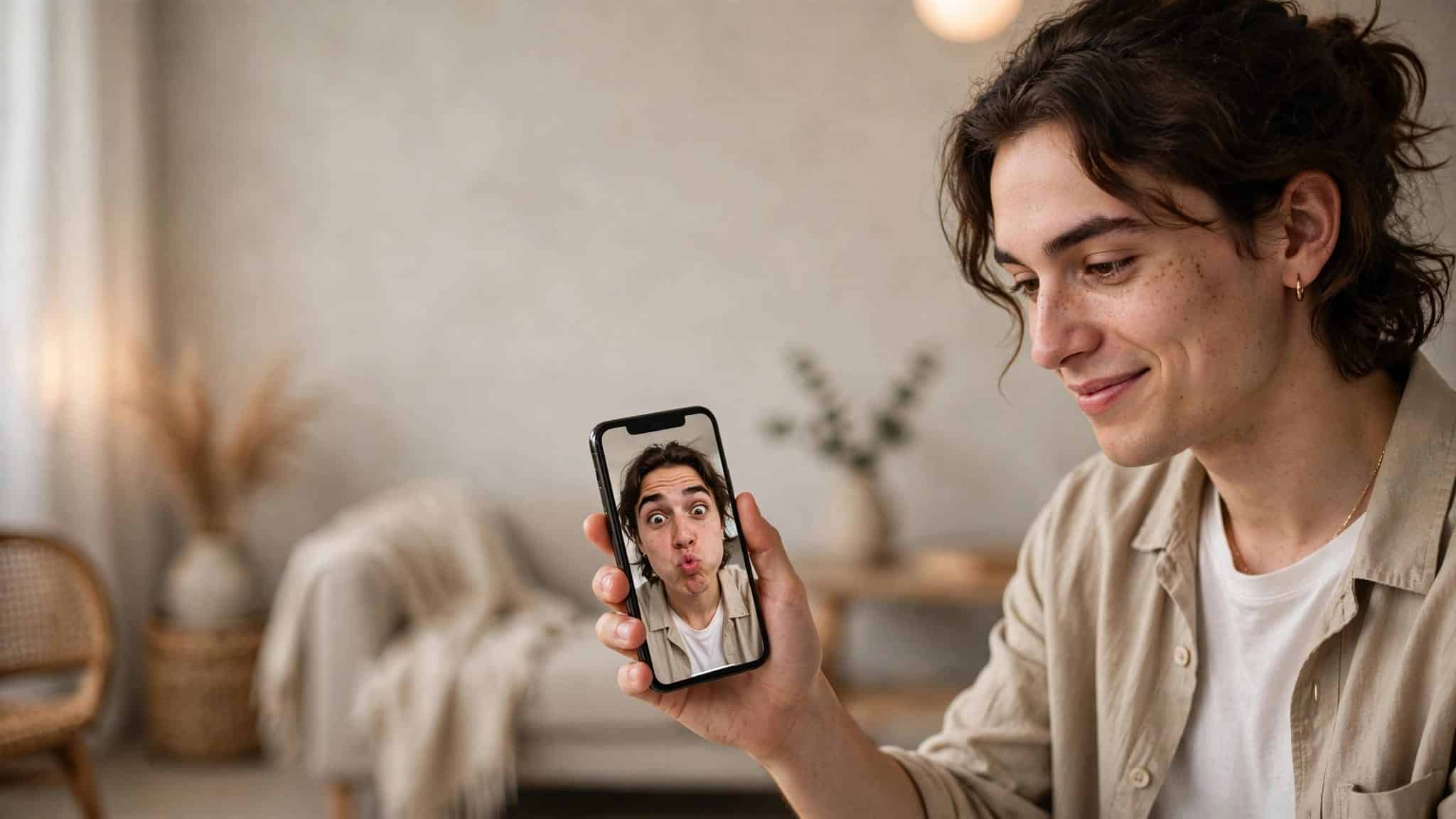
A terrible selfie can arrive with the emotional weight of a tiny, badly lit mystery. They like you, presumably. So why have they sent a photo where their nostrils appear to be doing most of the flirting?
The short answer is that bad selfies are often less about appearance than comfort, nerves, humour, or a front-facing camera with no respect for human bone structure. Before you treat one odd photo as evidence of anything, look at the wider conversation.
This post may contain affiliate links. If you make a purchase through these links, I may earn a small commission at no extra cost to you.
A Terrible Selfie Can Be a Small Act of Courage
Sending a polished photo feels safer in one way. It can also feel like presenting yourself for inspection. A ridiculous selfie lowers the pressure. It says, “I know this is not my best angle, but here I am anyway.”
They may be flirting through humour
Funny selfies can give someone a safer way to flirt. Some people would rather send a crossed-eye photo than risk looking eager. A deliberately silly image gives them cover. If you laugh, great. If you don’t, they can pretend it was only a joke.
That doesn’t prove they’re attracted to you. It may simply be how they manage nerves or reduce the risk of rejection. A little awkwardness often appears when somebody cares about your response.

They may be checking whether you are kind
A goofy photo can also be a low-stakes test of emotional safety. Not a calculated one, necessarily. They may simply want to know whether you’ll laugh with them, or turn their face into a public inquiry.
A warm reply gives them room to relax. “This is an alarming angle, but I respect the commitment” is kinder than pretending the photo needs a forensic review. Good flirting over text leaves space for both people to be a little ridiculous.
A playful selfie should make the conversation feel easier. If it becomes a demand for constant reassurance, the photo isn’t the real issue.
Why Bad Selfies Often Look Worse Than Real Life
Smartphone cameras capture one frozen fraction of a second from an odd distance. Their perspective differs from how a person appears in real life.
The image is judged by someone who knows every tiny variation in their own face. It is not a neutral tribunal on how somebody looks in a room.
Mirrors show the version you know
Most people see their reflected face far more often than a standard photograph. That mirror reflection is reversed, so a photo may make a familiar eyebrow tilt or uneven smile look suddenly strange.
A 2010 study on left-right facial orientation found that 71% of adult participants chose their own mirror image when shown images successively. Familiarity can shape preference, which is the basic idea behind the mere exposure effect.
Still, do not turn this into a rule carved on a bathroom mirror. A 2022 report from the British Psychological Society covered research that did not replicate a presumed face-familiarity preference. People vary. A photo is not “more real” than a mirror. It is simply different.
Close distance changes perspective
The front-facing camera is often held close to the face. That distance matters more than people think. Lens distortion can make facial features nearest the lens appear larger, while features farther away can seem smaller. A nose, forehead, or chin may look more prominent than it does when somebody is standing across the table from you.
Facial asymmetry also becomes easier to obsess over in a still image. Nearly every face has some asymmetry. In ordinary conversation, people see movement, expression, posture, voice, and the rest of a person. A close-up selfie removes all that context, then acts pleased with itself.

Phone Cameras Create Their Own Problems
Some selfie fails are ordinary technical mishaps, not epic fails worthy of a blooper reel. A phone camera can catch one at precisely the moment someone thinks, “This will probably be fine.”
Light can be unkind indoors
A ceiling light often throws shadows beneath the eyes and nose. A bright lamp beside one cheek can leave the other half of the face looking like it has entered witness protection. A low camera angle can exaggerate features, while camera flash can flatten them and make skin look shiny at night.
Natural light is usually more forgiving. Facing a window, rather than standing with the window behind you, creates softer light across the face. On a grey day, the light can be especially even. There is no need to hunt for a ring light before sending a casual photo.
A frozen smile can look unfamiliar
People don’t hold facial expressions still in real life. A phone asks them to do exactly that. The result is often a tight mouth, raised brows, and eyes that look as though they’ve just remembered an unpaid parking ticket.
The fix isn’t a perfect pose. Breathe out. Drop the shoulders. Look at something besides your own face on the screen for a second, then look back. A natural smile usually appears more easily while moving than while manufacturing one flawless expression.
A Better Selfie Does Not Need Heavy Editing
Nobody needs to disguise their face to send a decent photo. Small changes to distance, light, and timing do most of the useful work.
Put more space between the phone and your face
Hold the phone farther away, then use simple crop editing tools if needed. Cropping is only a modest framing adjustment, not heavy editing or a way to disguise someone’s face. Better still, prop it against a mug, shelf, or stack of books and use the timer. More distance reduces the exaggerated close-up effect that creates so many bad selfies.
Keep the phone around eye level or slightly above it. A dramatic angle from below has its place, perhaps in a horror film or an urgent message about a lost chin. It is rarely anybody’s friend in a casual selfie.
Use the settings that feel familiar
If a flipped preview feels more like the face you expect to see, iPhone users can change it. Apple’s Mirror Front Camera instructions explain that the setting is found under Settings, then Camera.
That setting does not improve bone structure, lighting, or your relationship with Tuesday morning. It only saves the image in the same orientation shown in the front-facing camera frame. Different phones handle this differently, so it is worth checking the camera settings rather than assuming every device works the same way.
Read the Message Around the Photo
The selfie itself is a clue. It is not the whole case file. A person who sends a blurry image after a lively conversation may be sharing a moment. Someone who sends one after weeks of silence may simply have opened their camera by accident.
Warmth has follow-through
Look for what happens after the photo. Do they ask questions, remember things you said, suggest plans, and respond with interest when you reply? Those small choices say more than whether their face was caught in the least flattering millisecond imaginable.
A strange photo followed by “I saw a dog in a raincoat and thought of you” has warmth. A flawless selfie followed by one-word replies and no effort has much less to offer.
Humour should have a soft landing
There is a difference between somebody making themselves the joke and somebody making you the target. If they send an awkward photo and say, “Please admire my haunted lighting,” that is self-aware. If they respond to your photo with repeated digs about your appearance, that is not playful chemistry.
Negging uses backhanded remarks to make approval feel scarce. A decent person notices discomfort, apologises if a joke misses, and changes course. You should not have to become a better sport so somebody else can keep taking little bites out of your confidence.
Reply Without Turning It Into a Performance
You don’t need a perfect response. They may have sent the photo for a little ordinary connection, not a twelve-part analysis of their cheekbones.
Match the warmth, not the chaos
If you like them and they send one of those funny selfies, answer with gentle teasing and something real. “The lighting is fighting for its life, but your smile is cute” works because it doesn’t pretend the photo is a fashion campaign.
If you’re unsure, keep it simple. Reply to what they wrote, ask about their day, or send a normal photo back later. You don’t need to compete by producing a worse selfie. This is flirting, not an audition for a cursed webcam.
Do not build a red-string board around one image
People who already worry about texting can turn a single blurry photo into a full investigation. Was it accidental? Is it a test? Did they send it to five other people? Did the angled ceiling fan mean something?
Most of the time, it meant they were in a room with a ceiling fan. If you’re replaying every exchange, stop overthinking your texts before your phone becomes a small emotional crime scene.
Key Takeaways
Bad selfies happen because phone cameras can distort perspective, indoor light can be harsh, and frozen expressions can look unfamiliar. A mirror image and a front-facing photo may feel different, but neither gets the final word on how someone looks.
When somebody you like sends an unflattering image, notice the tone and what follows. A silly photo beside consistent attention often means comfort. A perfect image beside confusing effort does not become meaningful because it has better lighting.
The best response is usually kind, proportionate, and human. You can laugh with them without making them feel like they need to earn the right to be seen.
Frequently Asked Questions About Bad Selfies
Why would someone send an unflattering selfie to a person they like?
They may be nervous, playful, or trying to make the conversation feel less formal. A deliberately awkward photo can say, “I am comfortable enough to be unpolished around you.” It can also be an easy opening for a joke.
Look for the wider pattern. Interest becomes clearer when they follow up, make plans, and show consideration outside the camera roll.
Does a terrible selfie mean they have low confidence?
Not necessarily. Confident people can send silly photos because they are not treating every interaction as a beauty contest. Someone with low confidence may also send them because humour feels safer than looking polished.
The important part is how they speak about themselves. Occasional self-deprecation is normal. Constantly asking you to disprove harsh things they say about their appearance can become exhausting for both of you.
Should I tell someone their selfie is bad?
Only if your connection already has that kind of gentle banter, and only if the joke stays warm. You can tease the angle, lighting, or accidental expression without treating their face as the punchline.
If they seem embarrassed, offer reassurance without laying it on with a trowel. “You look good, the camera just caught you mid-blink” is enough.
The Photo Is Not the Point
A bad selfie is rarely a reliable measure of beauty or attraction. It is a tiny technical accident, a nervous joke, or a small bid for connection sent through a phone.
Pay attention to whether the person makes you feel comfortable, included, and respected. Real interest has follow-through, even when the lighting is dreadful.


